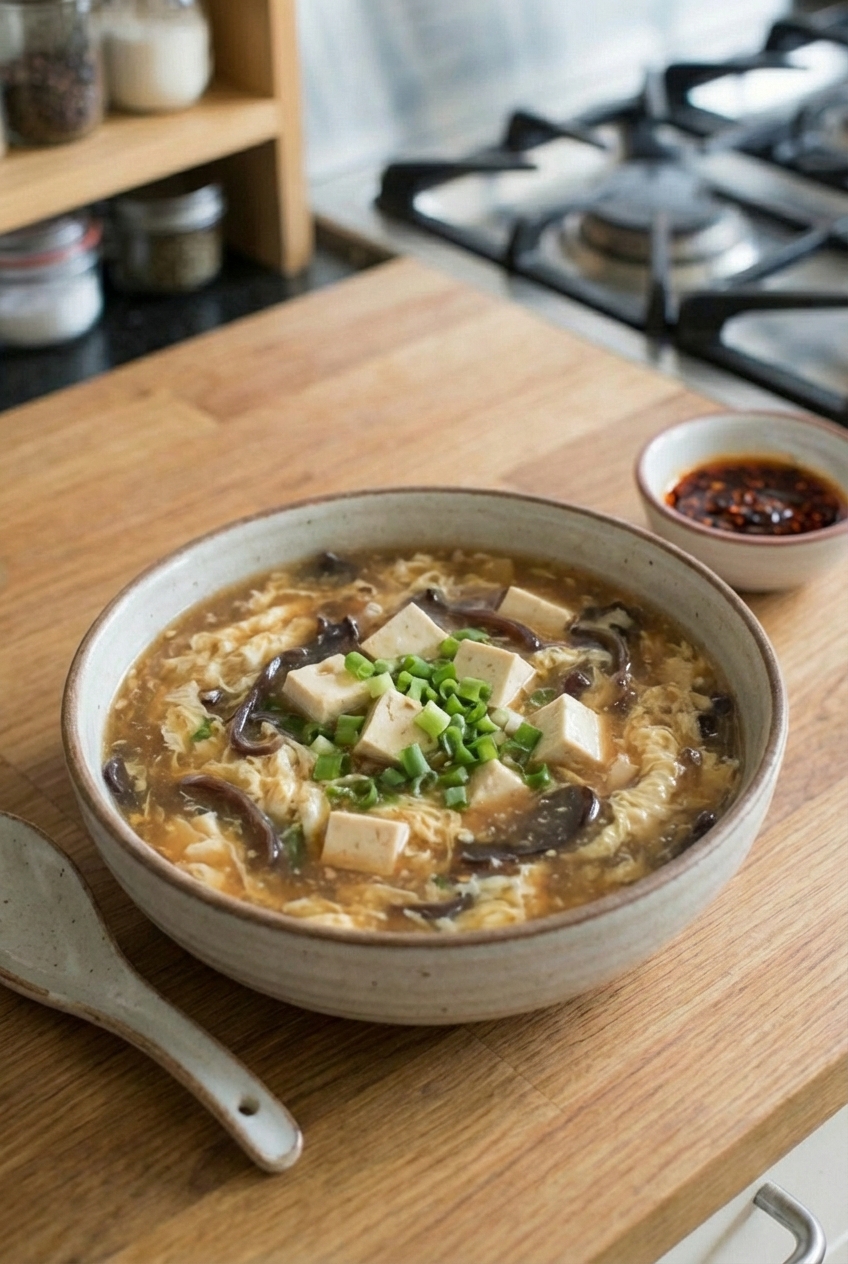
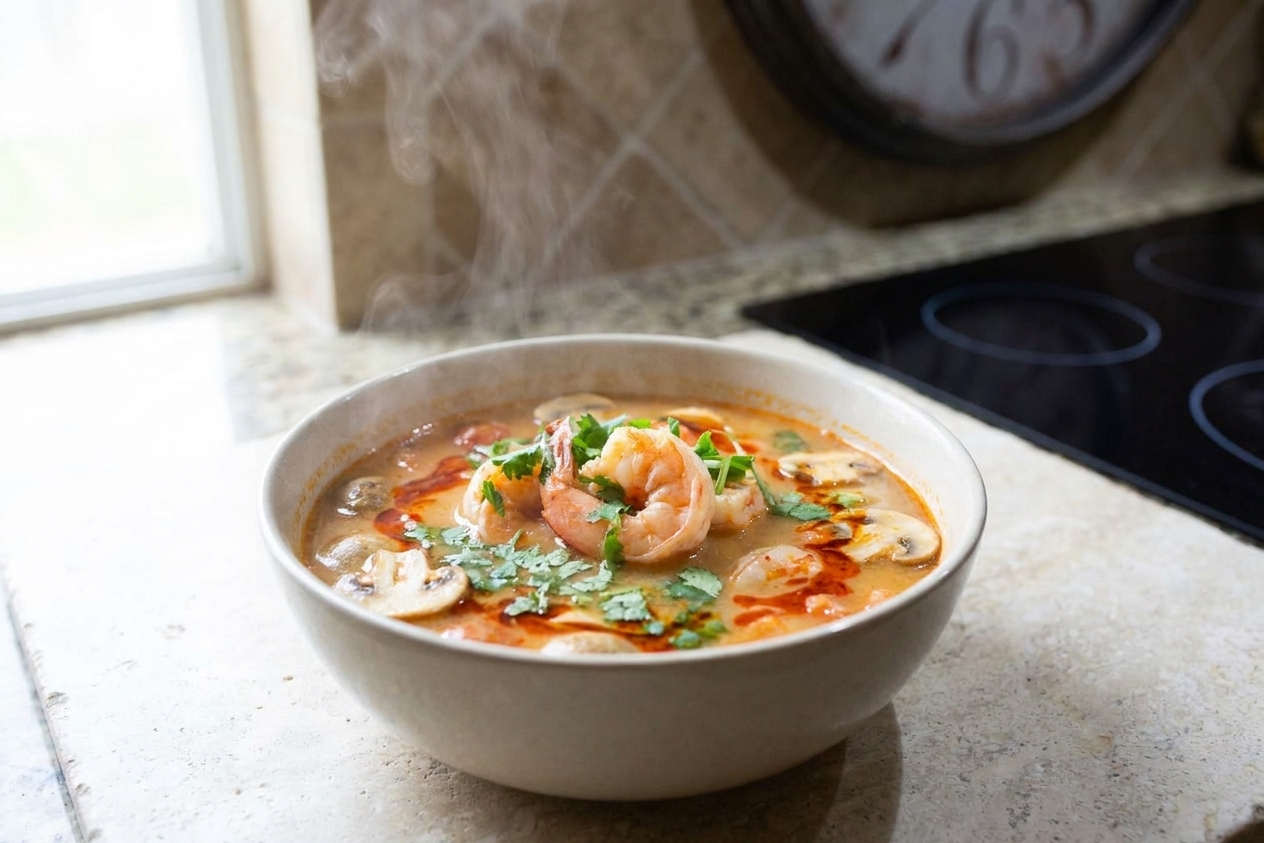
What makes hot and sour soup “hot” and “sour”?
Hot comes from white pepper and chili oil or chili crisp. Sour comes from vinegar, often Chinese black vinegar, though rice vinegar (or a blend) is common at home and in plenty of kitchens.
Is this a traditional hot and sour soup?
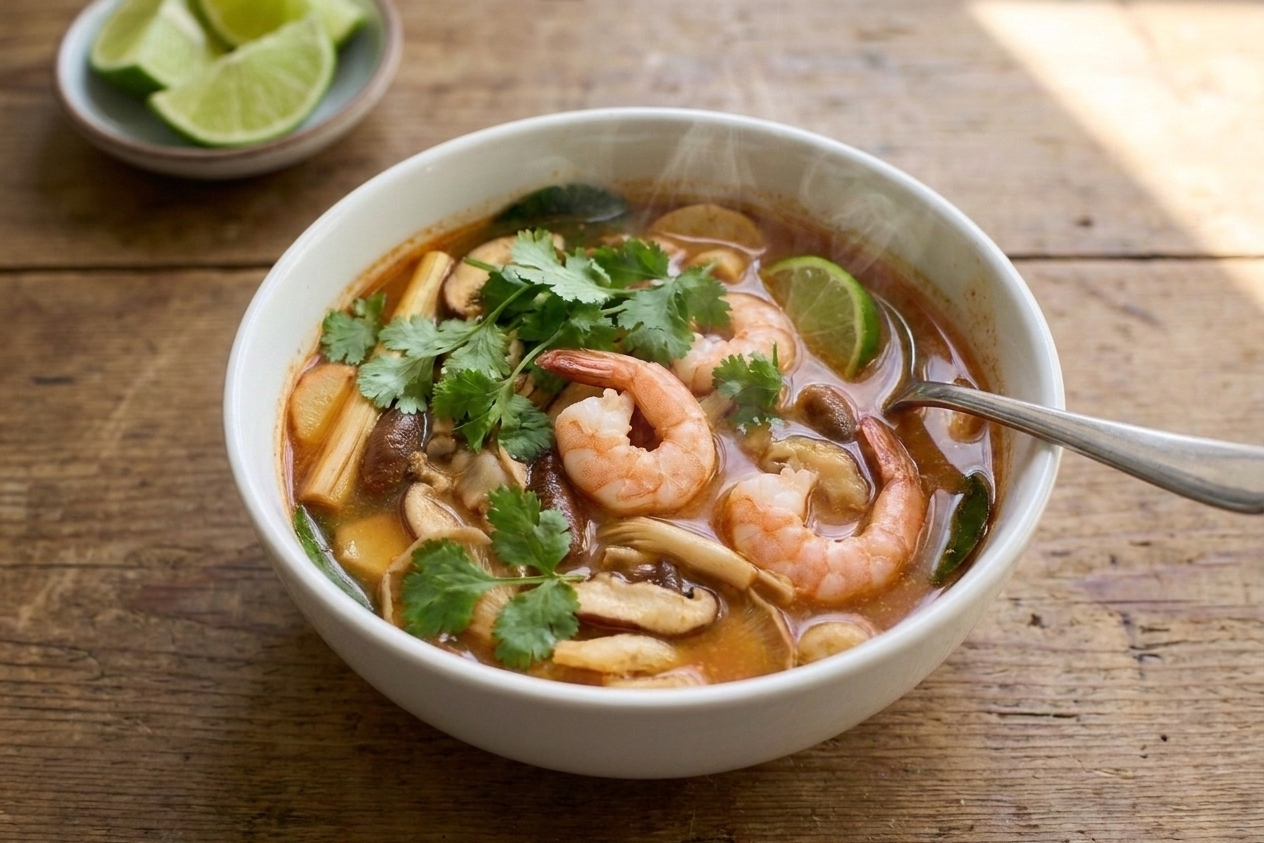
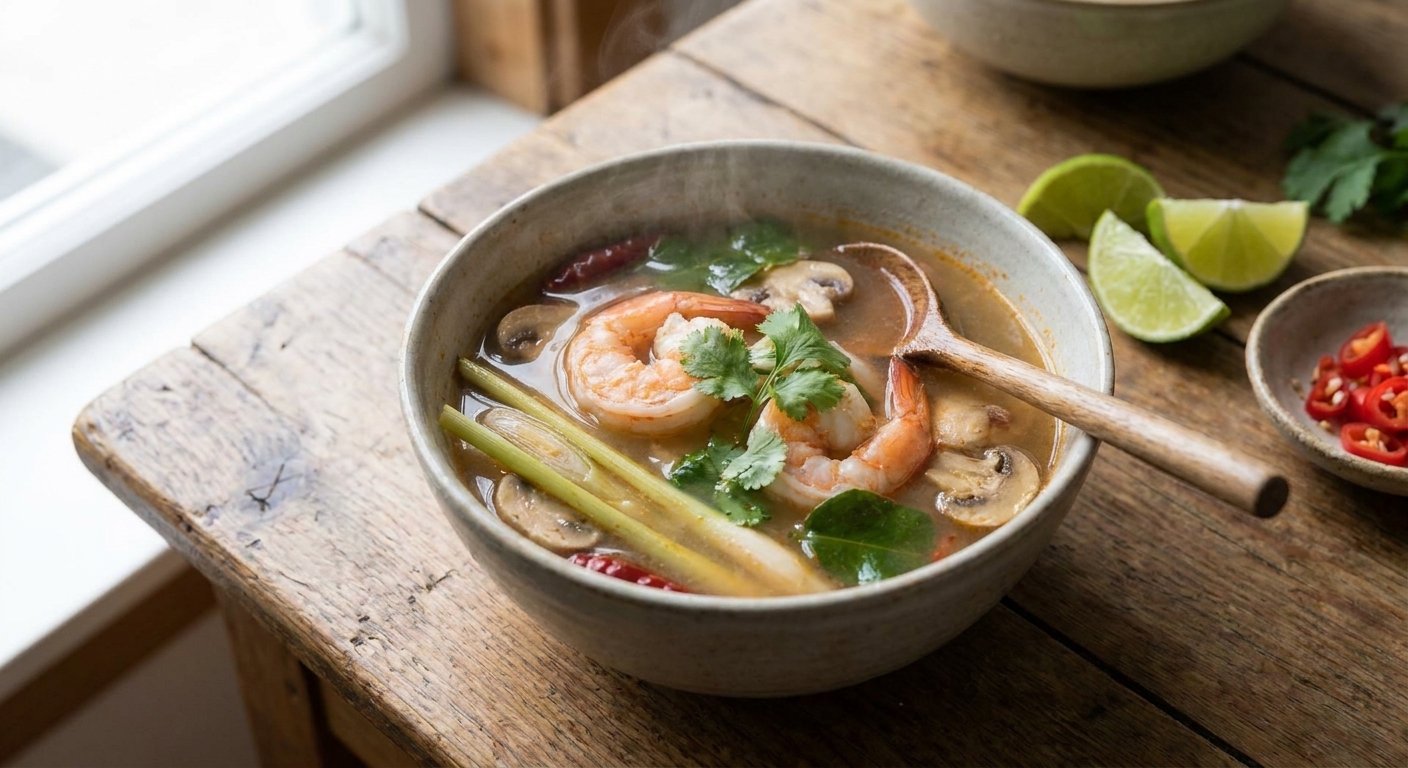
It is a streamlined, weeknight-friendly version. You will not see every classic ingredient (like bamboo shoots, wood ear mushrooms, or lily buds), but you still get the same cozy, punchy vibe with normal grocery store ingredients.
Can I make this vegetarian or vegan?
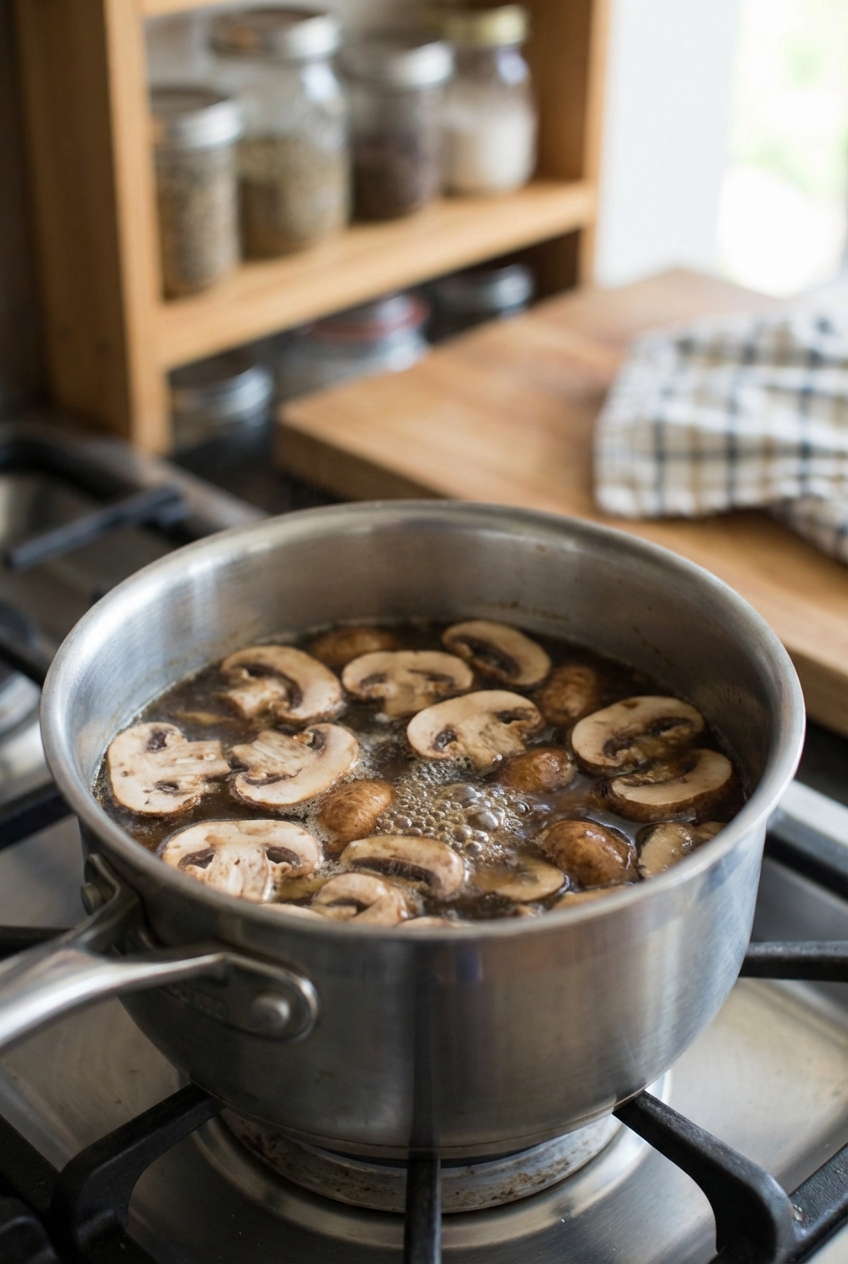
Yes. Use vegetable broth and skip the egg. You can try a vegan egg substitute, but it will not make the same delicate ribbons. Expect more of a gentle thickening or curdy texture. Doubling down on mushrooms helps a lot, and a spoon of miso whisked in at the end is a great vegan umami boost.
What can I use instead of Chinese black vinegar?
Rice vinegar is the easiest swap. If you want it closer to black vinegar’s malty depth, mix 2 tablespoons rice vinegar with 1 teaspoon balsamic as an approximation, then adjust to taste.
How do I keep the egg ribbons from turning into egg clouds?
Two things: keep the soup at a gentle simmer (not a rolling boil) and stir in one direction to create a little vortex. Pour the beaten egg slowly in a thin stream, then stop stirring for 10 to 15 seconds so it can set.
Is this soup gluten-free?
It can be. Use gluten-free tamari instead of soy sauce and make sure your chili crisp and broth are labeled gluten-free.
How do I make it thicker like restaurant soup?
Add a bit more cornstarch slurry, 1 teaspoon at a time. Simmer for 60 seconds after each addition, then decide. The soup thickens as it cools, so do not overdo it.