Common Questions
What is salsa puttanesca?
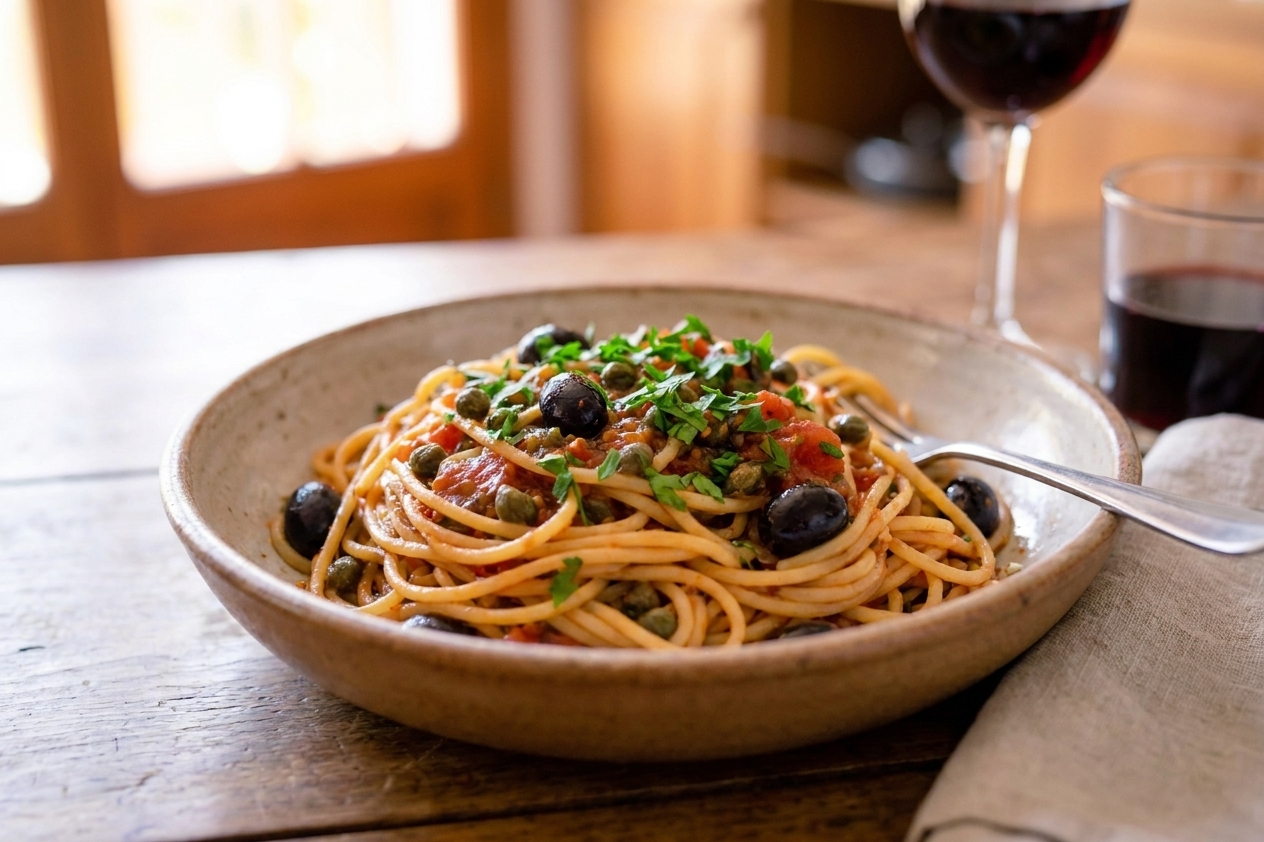
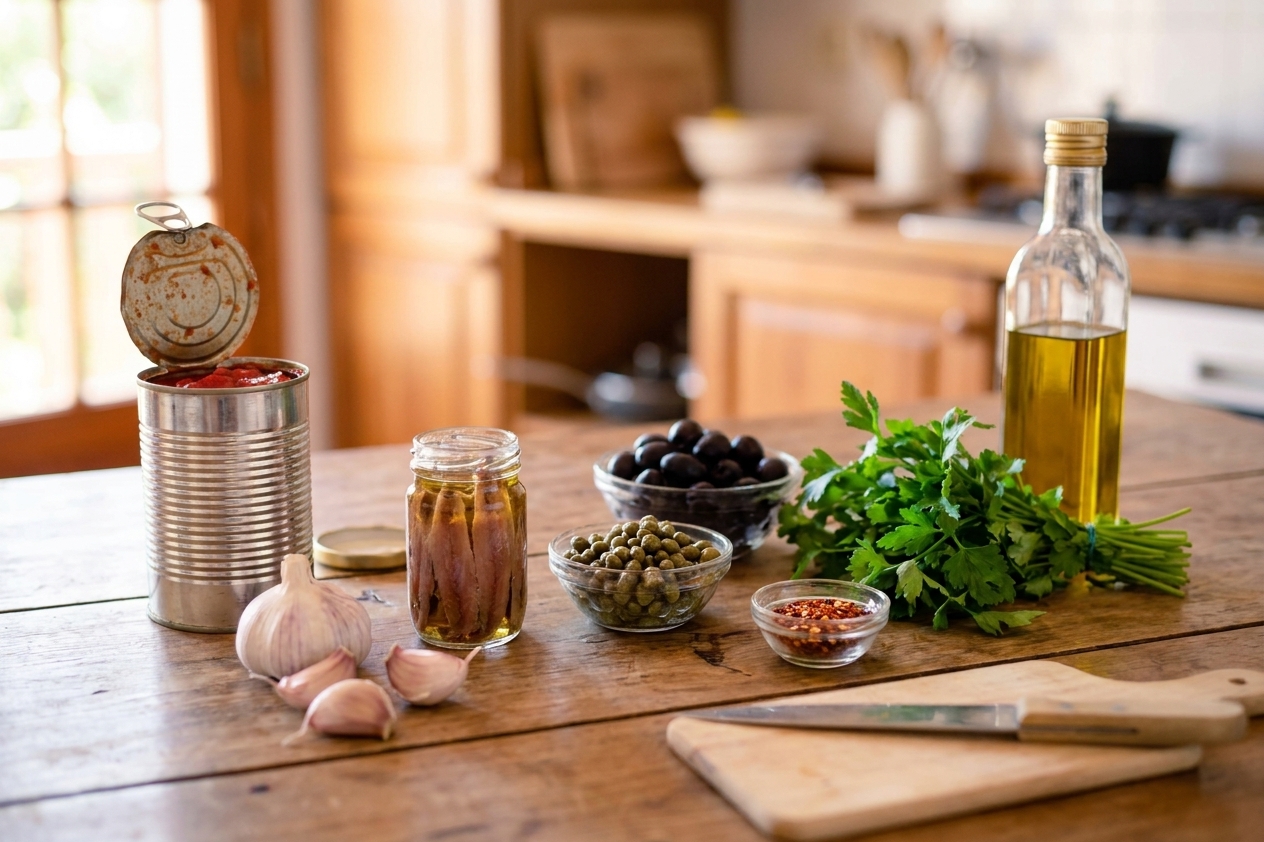
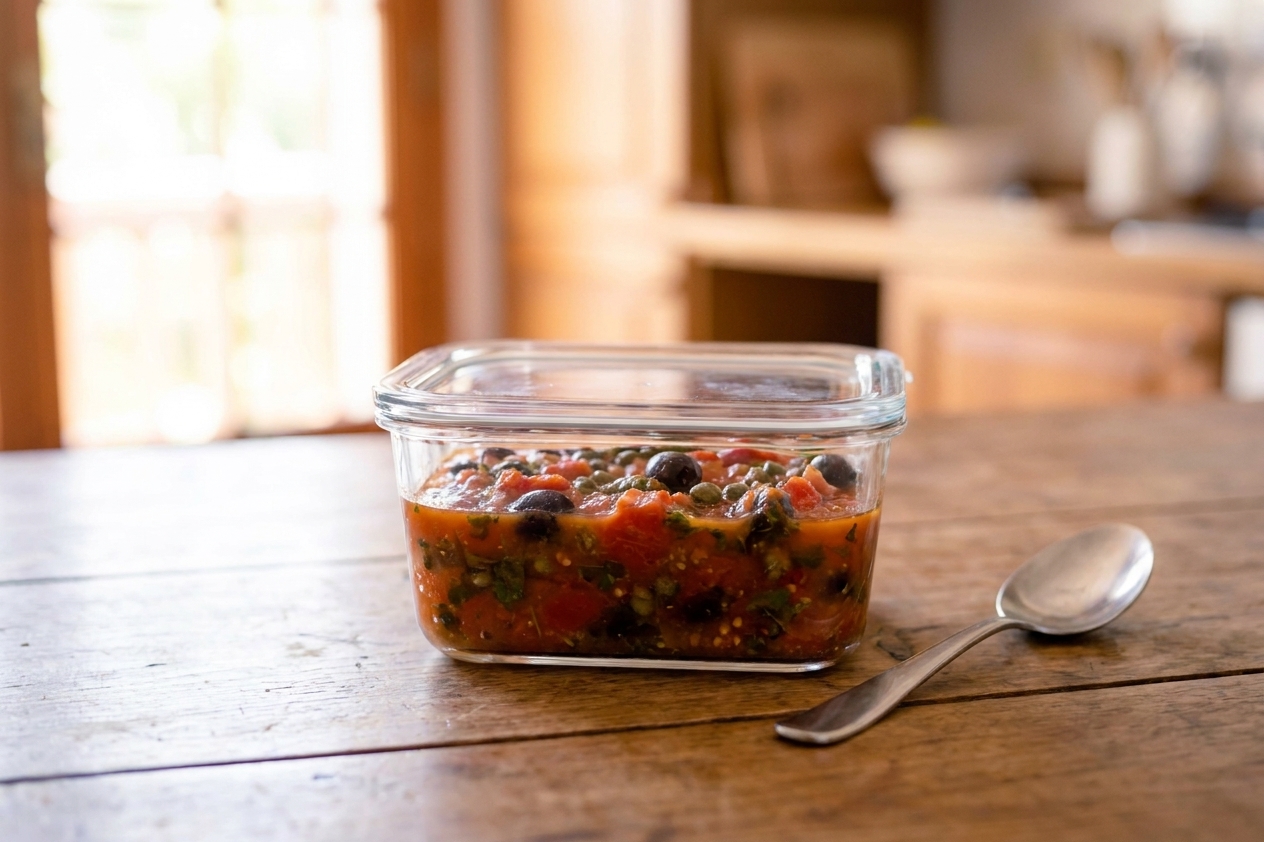
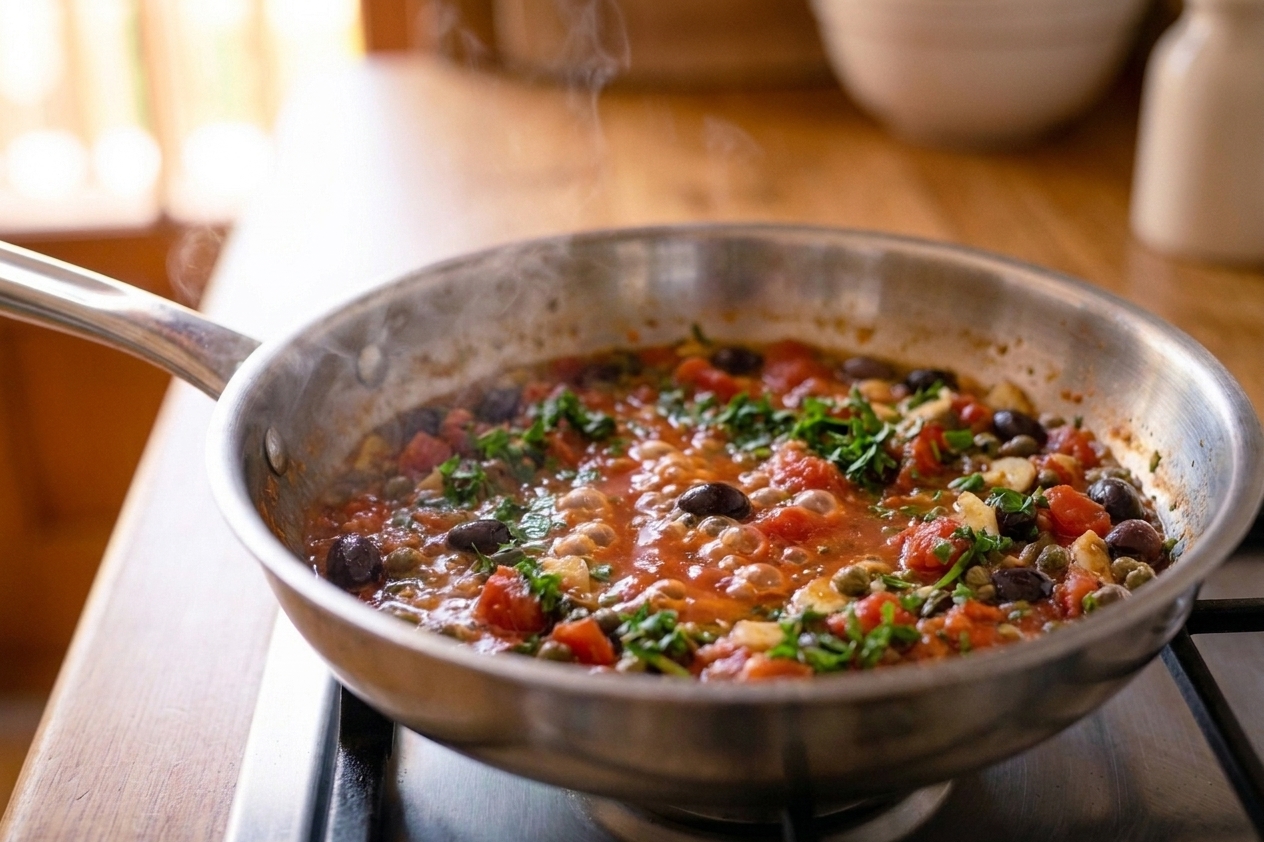
It is a tomato sauce traditionally made with garlic, anchovies, olives, capers, and chile. Think: bold, briny, and fast. “Salsa” here simply means “sauce” in Italian, though you will also see it more commonly called sugo alla puttanesca or spaghetti alla puttanesca.
Do I have to use anchovies?
You do not have to, but they are the secret. They dissolve into the oil and taste more like deep savory seasoning than “fish.” If you skip them, add an extra pinch of salt and consider a little tomato paste for body.
Should I use oil-packed anchovies? Do I use the oil?
Oil-packed anchovy fillets (tin or jar) are ideal here. You can use a little of the anchovy oil, too, but you do not have to. If you do, swap it for a bit of the olive oil so the sauce does not get greasy.
What kind of olives work best?
Classic is kalamata (rich and winey), but any good briny olive works, including black or Gaeta-style. If your olives are packed in water or super salty brine, taste first and adjust salt at the end.
Is puttanesca sauce spicy?
It can be. This recipe is mild to medium with 1/2 teaspoon red pepper flakes. If you want it gentler, use 1/4 teaspoon. If you want it loud, go to 1 teaspoon and do not look back.
Can I make it with fresh tomatoes?
Yes, but it will take longer and you will need to cook down the water. For weeknights, canned crushed tomatoes are the most reliable.
How do I keep it from being too salty?
Rinse capers if they are punchy, choose olives you actually enjoy eating, and do not add extra salt until the end. Anchovies, capers, and olives are doing a lot of the seasoning work already. If you are salt-sensitive, look for low-salt capers and use a lighter hand with olives.
Can I simmer it longer?
Absolutely. It is great fast, but if you have an extra 10 to 15 minutes, a longer simmer will mellow acidity and deepen the flavor. Add a splash of water if it starts to get too thick.