What kind of fresh tomatoes are best for spaghetti sauce?
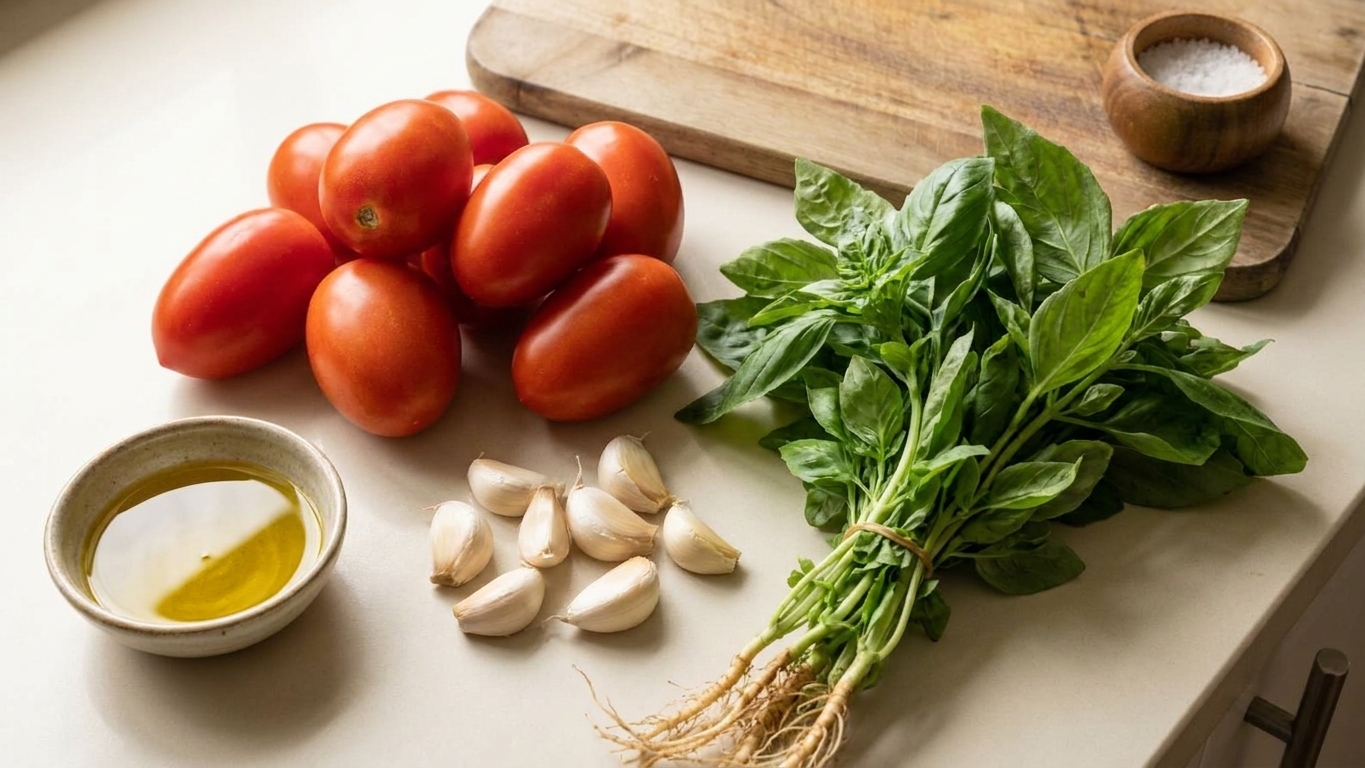
Roma or plum tomatoes are the easiest path to a thick sauce because they have less water and more flesh. Beefsteak tomatoes work too, but you may want a longer simmer to reduce.
Do I need to peel the tomatoes?
Not strictly. If you blend the sauce, the skins mostly disappear and you likely will not notice them, especially with a strong blender. If you want a more classic, silky texture without blending, peeling helps. This recipe includes an easy blanch-and-slip option.
How do I keep fresh tomato sauce from tasting too acidic?
First, simmer a bit longer and make sure you used enough salt. Then try a small pinch of sugar or a tiny knob of butter. Avoid dumping in lots of sugar. A little goes a long way.
My tomatoes are super juicy. What should I do?
You have two easy options: just simmer longer uncovered to reduce, or scoop out some of the watery seed gel as you chop (no need to be perfect). Both get you to a thicker, less watery sauce.
Can I make it smoother?
Yes. Use an immersion blender right in the pot, or transfer to a blender in batches. Blend only part of it if you want “mostly smooth with some chunky bits.”
Any blender safety tips?
If you are using a countertop blender, do not fill it more than halfway. Vent the lid (or remove the center cap and cover with a towel), and start on low so hot steam does not force the lid off.
Can I add meat?
Absolutely. Brown 1 pound of ground beef, turkey, or Italian sausage first, spoon off excess fat, then start the sauce in the same pot with the remaining drippings for extra flavor.
My sauce is thin. How do I fix it?
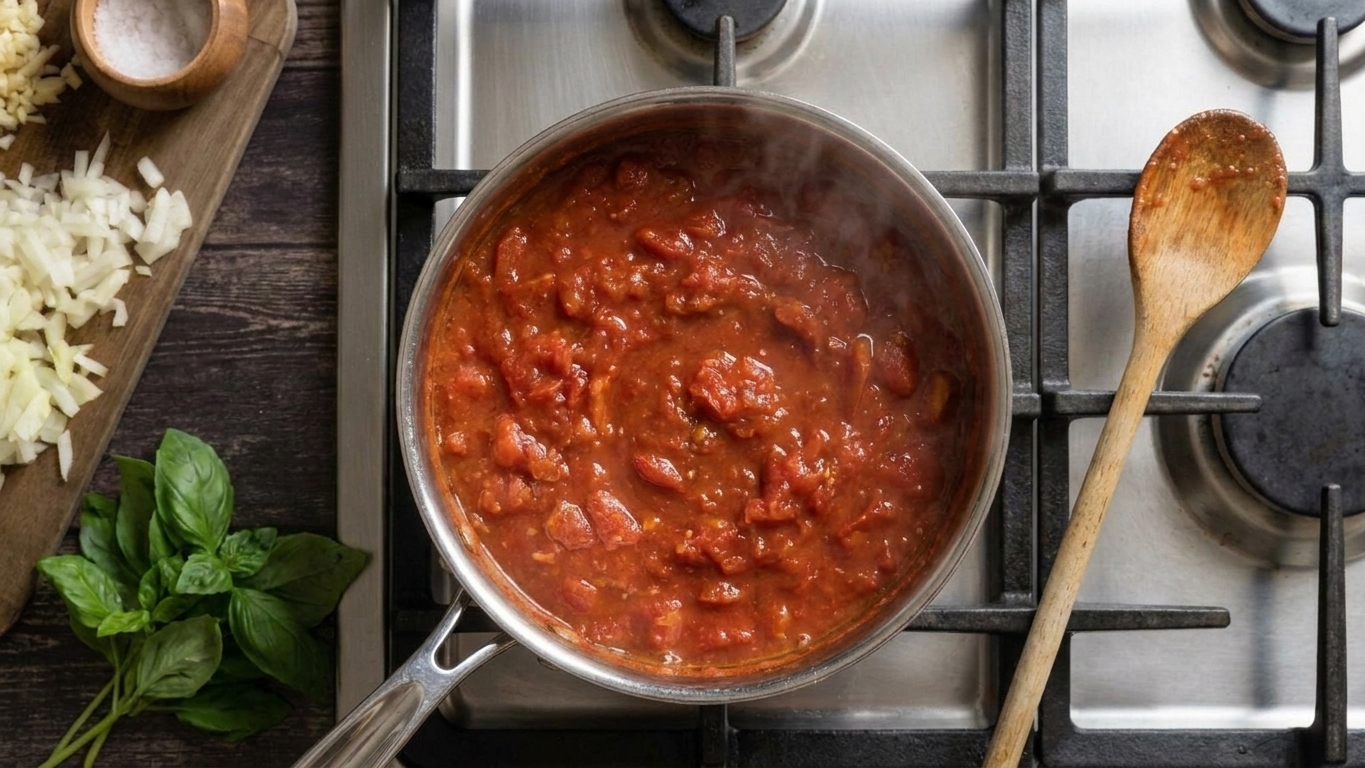
Keep simmering uncovered, stirring occasionally (and more often as it thickens). If you are in a hurry, stir in 1 to 2 tablespoons of tomato paste and let it cook for a few minutes to thicken and deepen the flavor.