Mom's Best Recipes
Recipe

Spicy Garlic Chinese Noodles

Chewy noodles tossed in a glossy garlic-soy sauce with chili crisp, sesame, and scallions. Weeknight energy, takeout-level flavor.

Author By Matt Campbell
4.8
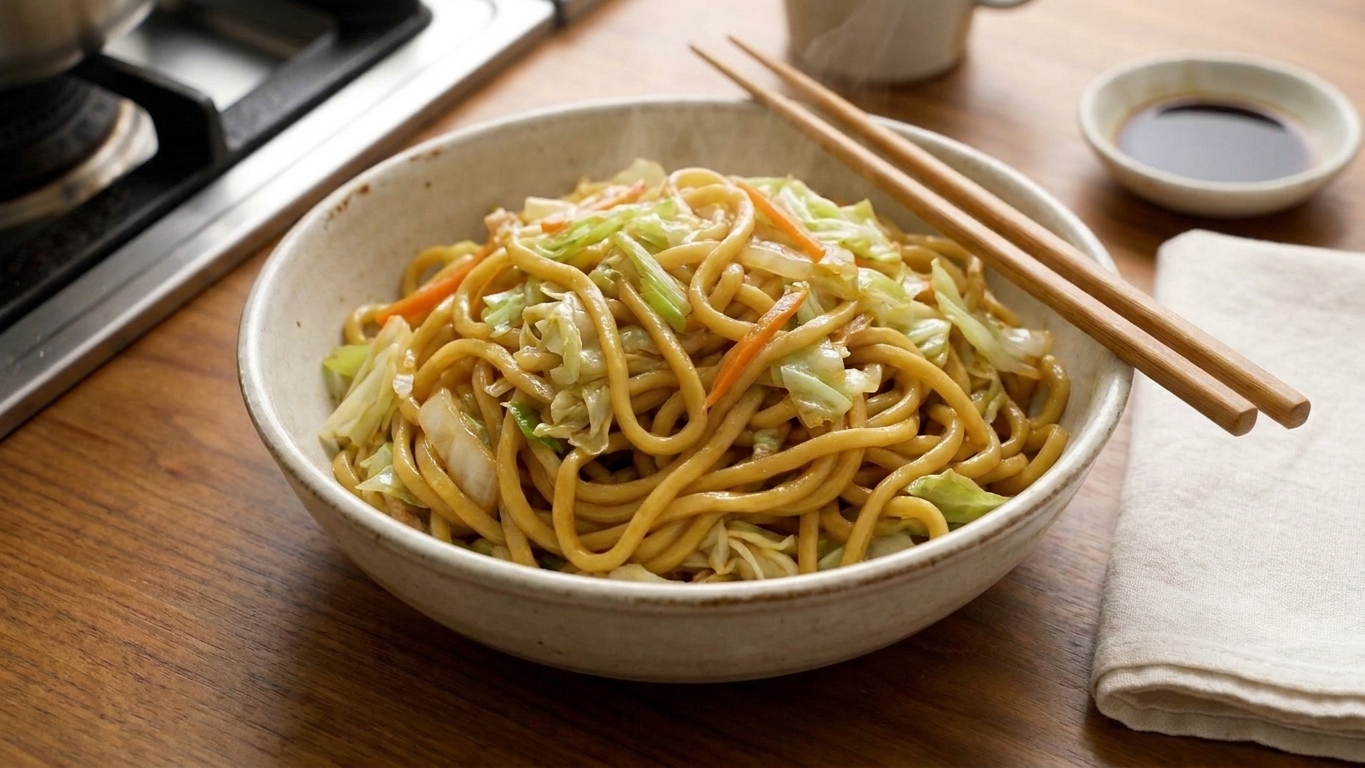
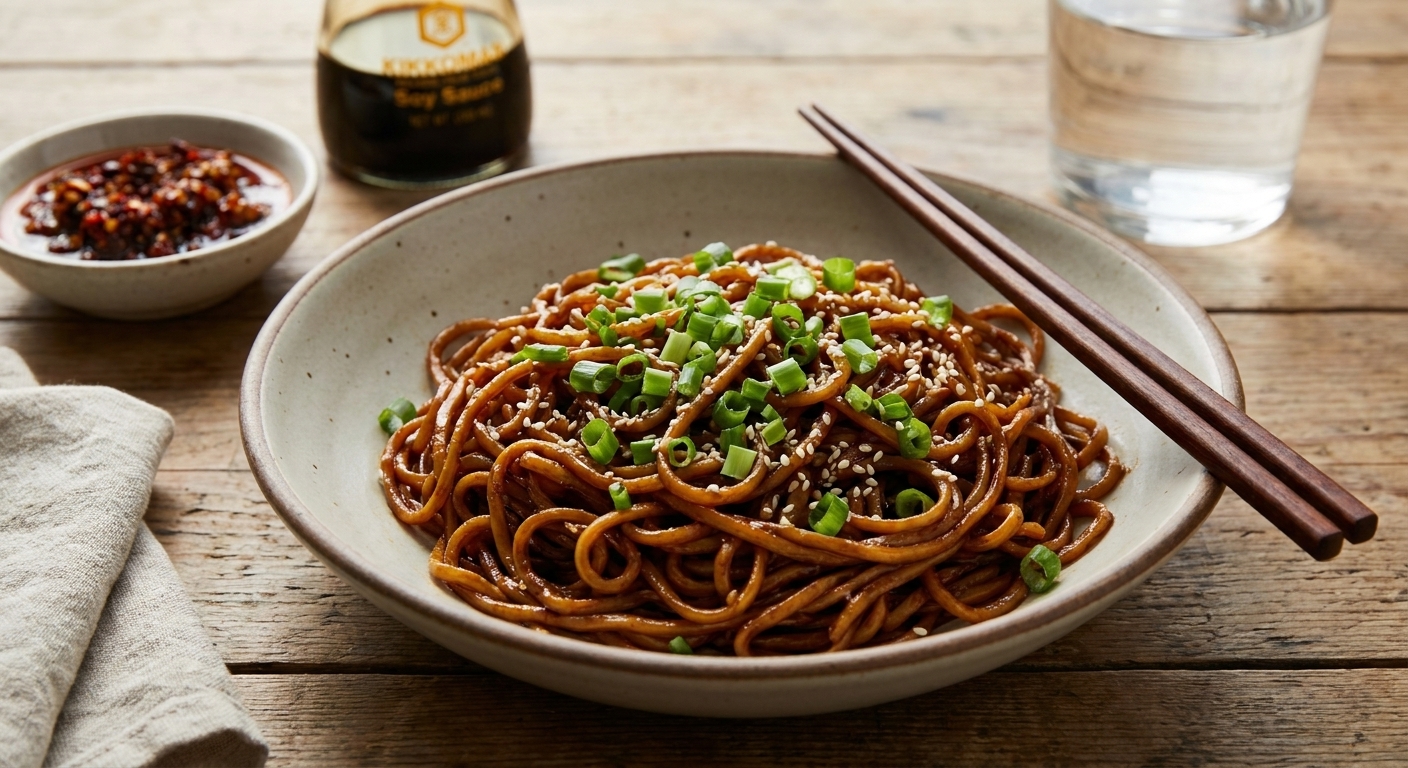
A deep bowl of glossy Chinese-style noodles tossed in a reddish-brown garlic chili sauce, topped with sliced scallions and sesame seeds on a warm kitchen table

Chinese noodles are one of my favorite kitchen magic tricks because they can be cozy and bright at the same time. One pan for aromatics, one bowl for sauce, and suddenly you are eating glossy, garlicky noodles that taste like you had a plan all along.

This is my weeknight go-to: chewy noodles (use what you can find), a bold soy-sesame backbone, and enough chili crisp to make you pause mid-bite like, okay wow. It is simple, forgiving, and the leftovers do not make you sad.

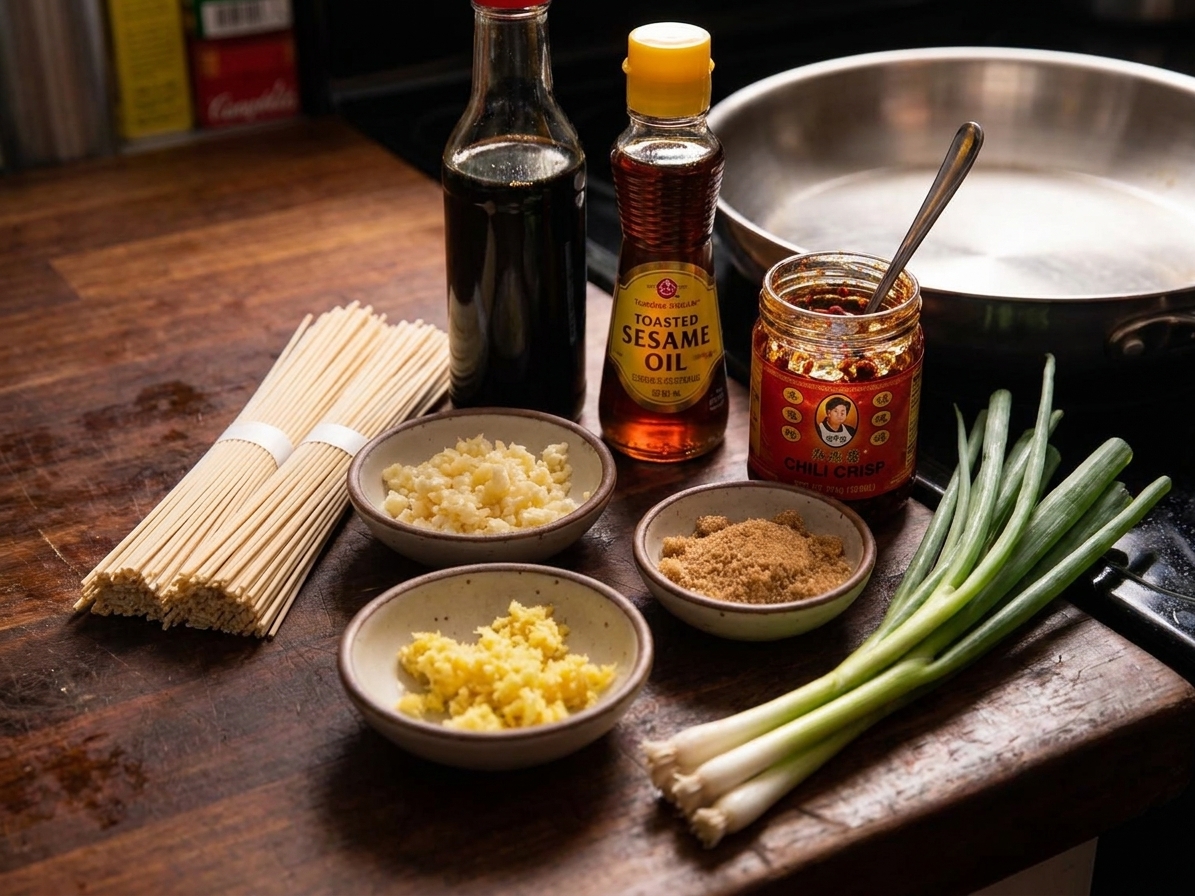
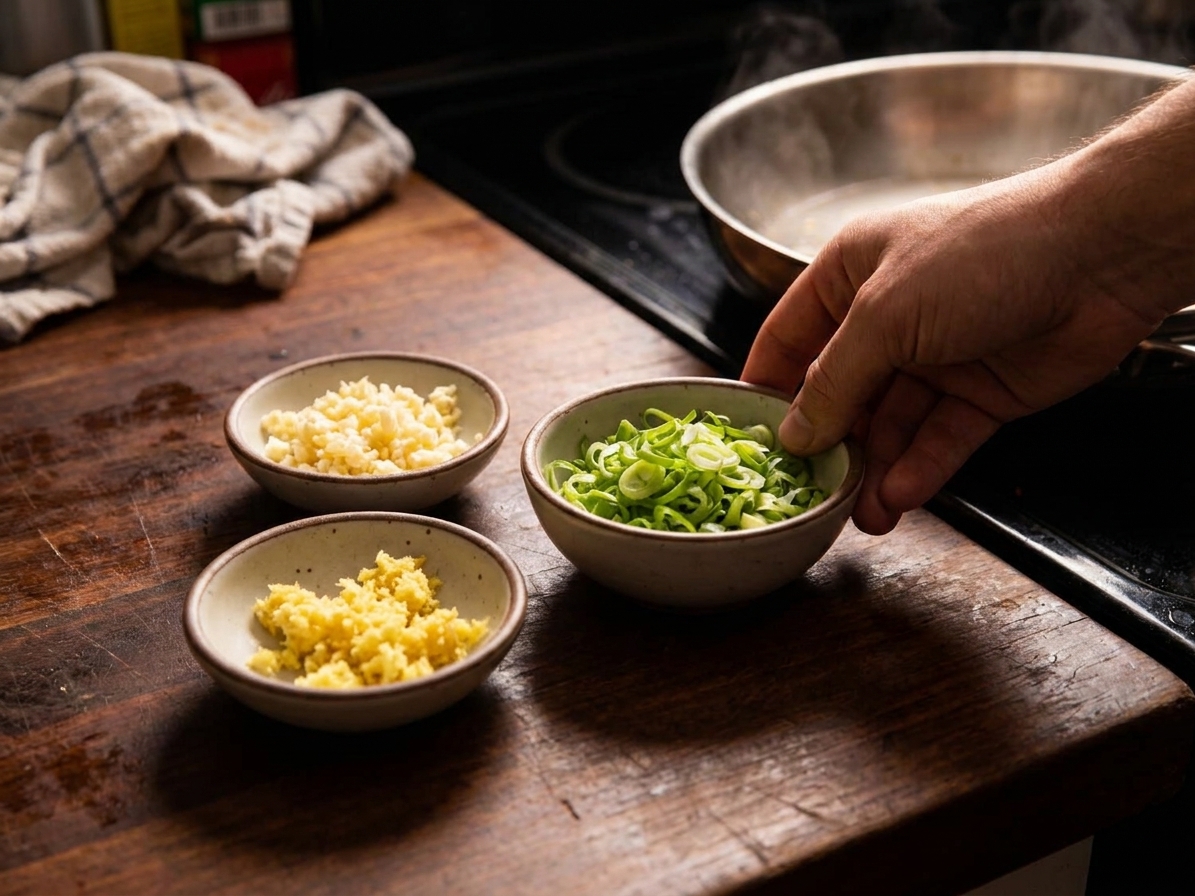
Ingredients for spicy garlic Chinese noodles arranged on a kitchen counter, including noodles, soy sauce, sesame oil, chili crisp, garlic, ginger, scallions, and brown sugar

Why It Works

  • Big flavor in a small window: the sauce comes together in 2 minutes and clings to the noodles instead of pooling at the bottom.
  • Crisp edges, not soggy aromatics: garlic and ginger get a quick sizzle so they taste toasted and fragrant, not raw.
  • Flexible noodle options: works with lo mein, fresh wheat noodles, ramen, udon, or even spaghetti in a pinch.
  • Easy heat control: start mild, then add more chili crisp until your noodles have the exact amount of personality you want.

Pairs Well With

Storage Tips

Refrigerate: Cool noodles completely, then store in an airtight container for 3 to 4 days.

Reheat (best method): Warm in a skillet over medium heat with a splash of water (or broth). Toss until glossy again. The water loosens the sauce and brings it back to life.

Microwave method: Cover loosely and microwave in 30-second bursts, stirring each time. Add a teaspoon of water if it looks dry.

Freeze: You can, but the texture is best fresh. Wheat noodles can turn a bit softer or mealy after thawing. If you do freeze, portion first and thaw overnight in the fridge before reheating in a skillet with a splash of water.

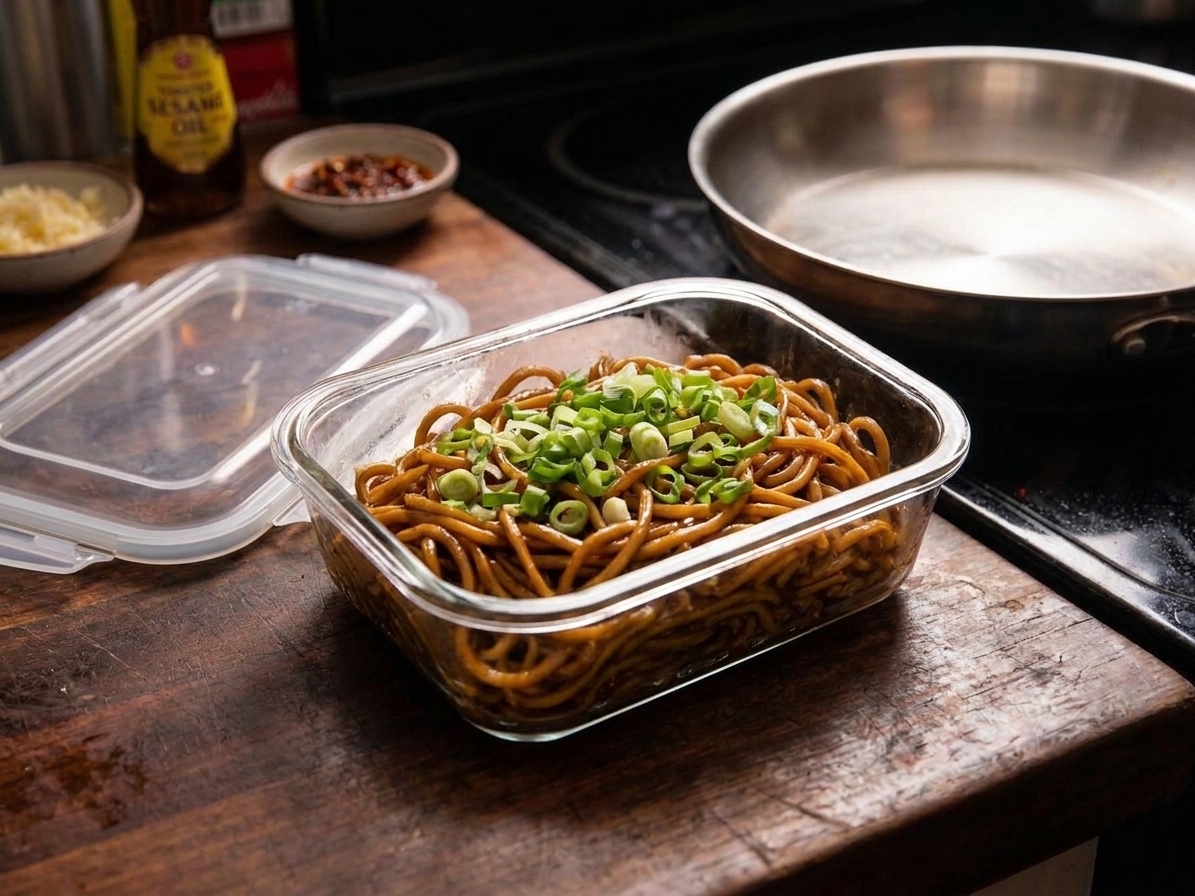
A glass meal prep container filled with saucy Chinese noodles topped with scallions, sitting on a kitchen counter with the lid nearby

Common Questions

Common Questions

What kind of noodles should I use?

My first choice is fresh Chinese wheat noodles (often labeled lo mein noodles). But this sauce is friendly: ramen noodles, udon, yakisoba noodles, rice noodles, and even spaghetti all work. Just cook to al dente so they do not go mushy when tossed.

Quick timing note: fresh lo mein style noodles cook fast, so start checking around 2 to 3 minutes. Dried noodles usually take longer, so follow the package and pull them a little early.

How do I keep noodles from sticking together?

Two things help: (1) do not overcook them, and (2) toss them into the pan while they are still warm with a little sauce or a teaspoon of oil. If they sit drained in a colander too long, they will glue themselves together out of spite.

Is chili crisp the same as chili oil?

Not exactly. Chili crisp usually has crunchy bits like fried chilies, garlic, and sometimes soybeans. Chili oil is mostly oil with chili flavor. You can use either, but chili crisp gives you those fun crunchy pops.

How spicy is this?

It depends on your chili crisp. Some brands are a gentle tingle, others are a full announcement. If you are unsure, start with 1 tablespoon, toss, taste, then work up to 2 to 3 tablespoons.

Can I add protein or vegetables?

Absolutely. Quick ideas: shredded rotisserie chicken, sautéed shrimp, scrambled eggs, or crispy tofu. For veggies, go for fast-cooking options like snap peas, baby bok choy, mushrooms, shredded cabbage, or spinach.

My sauce tastes too salty. How do I fix it?

First, make sure you are using low-sodium soy sauce if you have it, since soy plus oyster sauce can add up fast. If it is already mixed, add a splash of rice vinegar and a teaspoon of brown sugar, then toss with more noodles or a handful of veggies. If it is still intense, loosen with a bit of water and taste again.

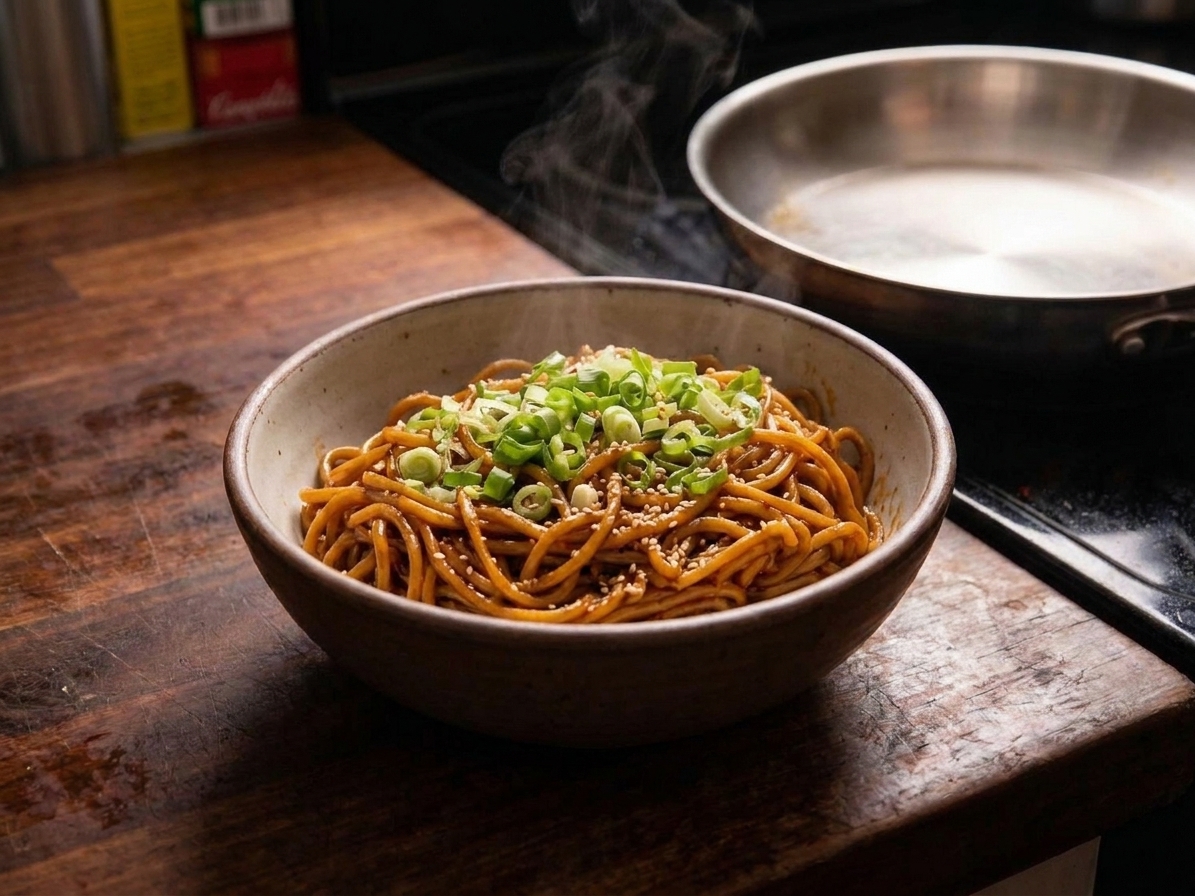
I used to think “Chinese noodles at home” meant a long ingredient list, specialty sauces, and the kind of prep that turns a Tuesday into a full event. Then I started treating noodles like the ultimate pantry canvas: something chewy to grab onto a sauce that is salty, tangy, a little sweet, and just spicy enough to keep things interesting.

This version is the one I make when I want comfort but also want my food to have some personality. It is fast, it is loud in the best way, and it always reminds me that good cooking is mostly about tasting as you go and not being afraid of a little garlic.

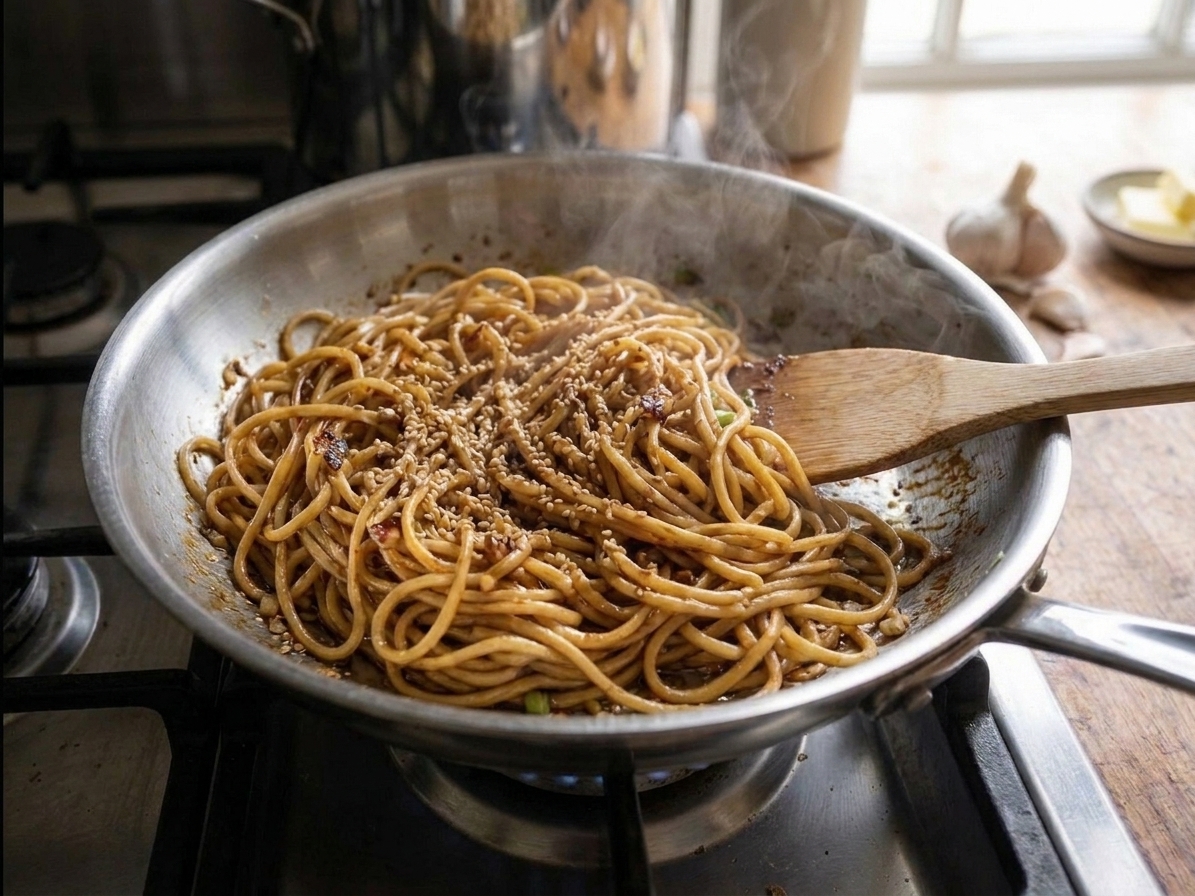
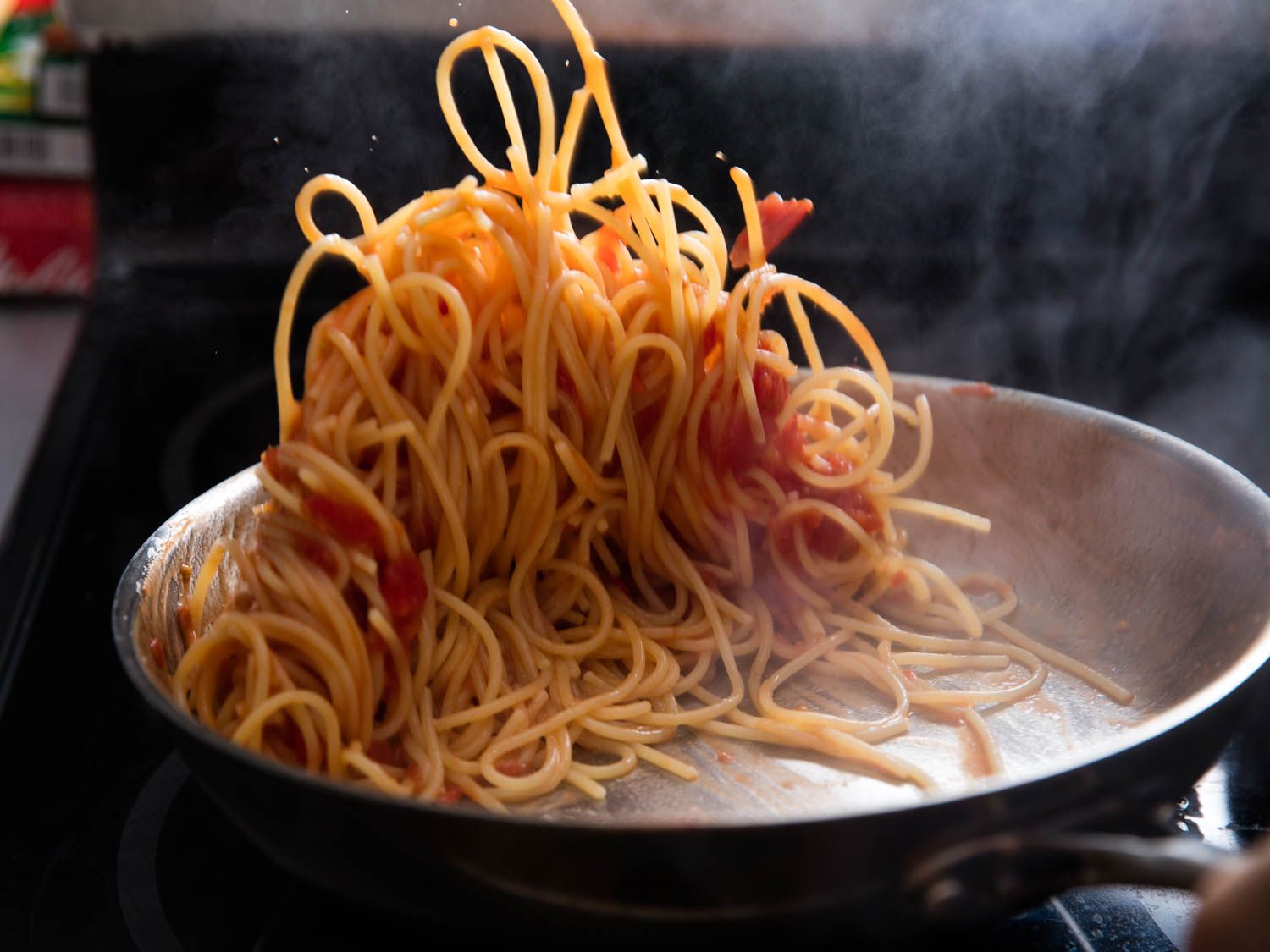
A cook using tongs to toss saucy Chinese noodles in a large skillet on a home stove with steam rising