Do I need a takoyaki pan?
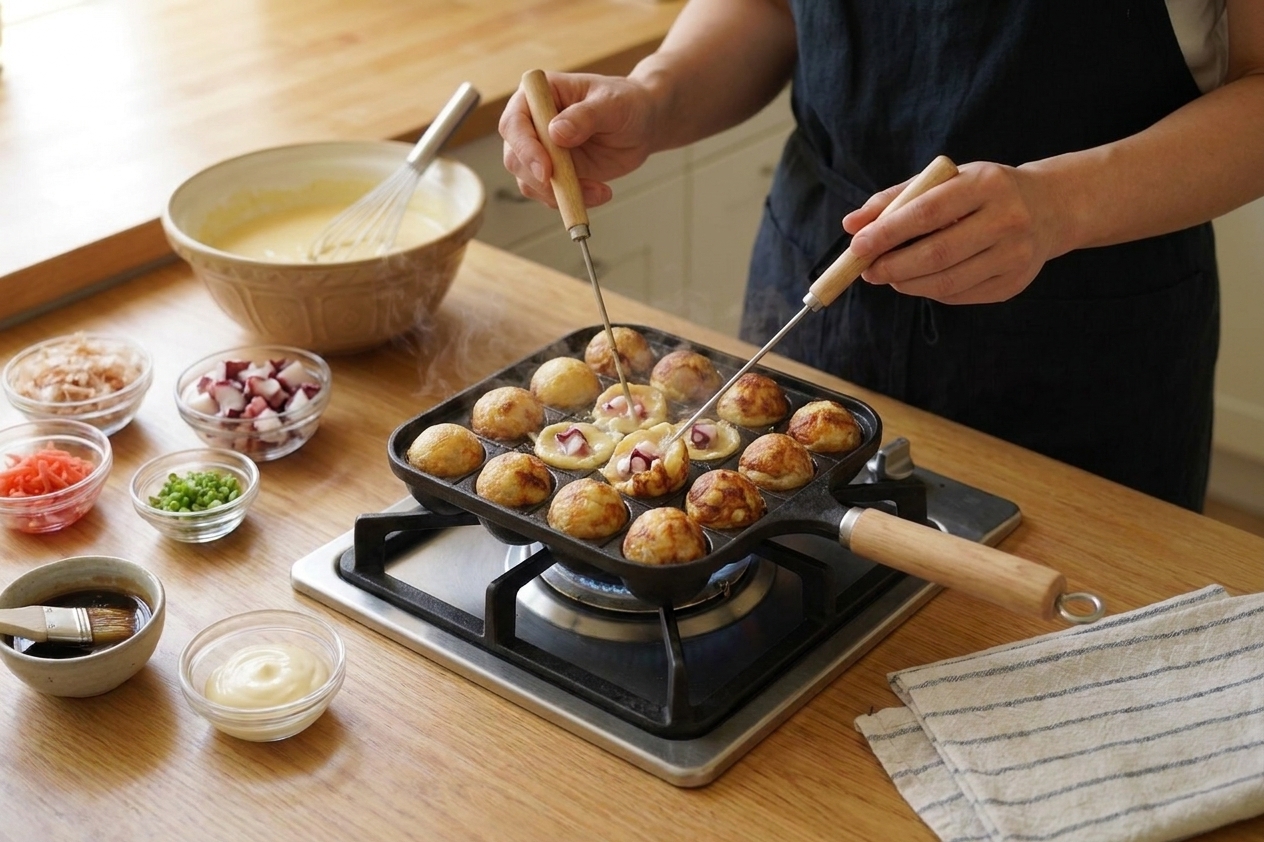
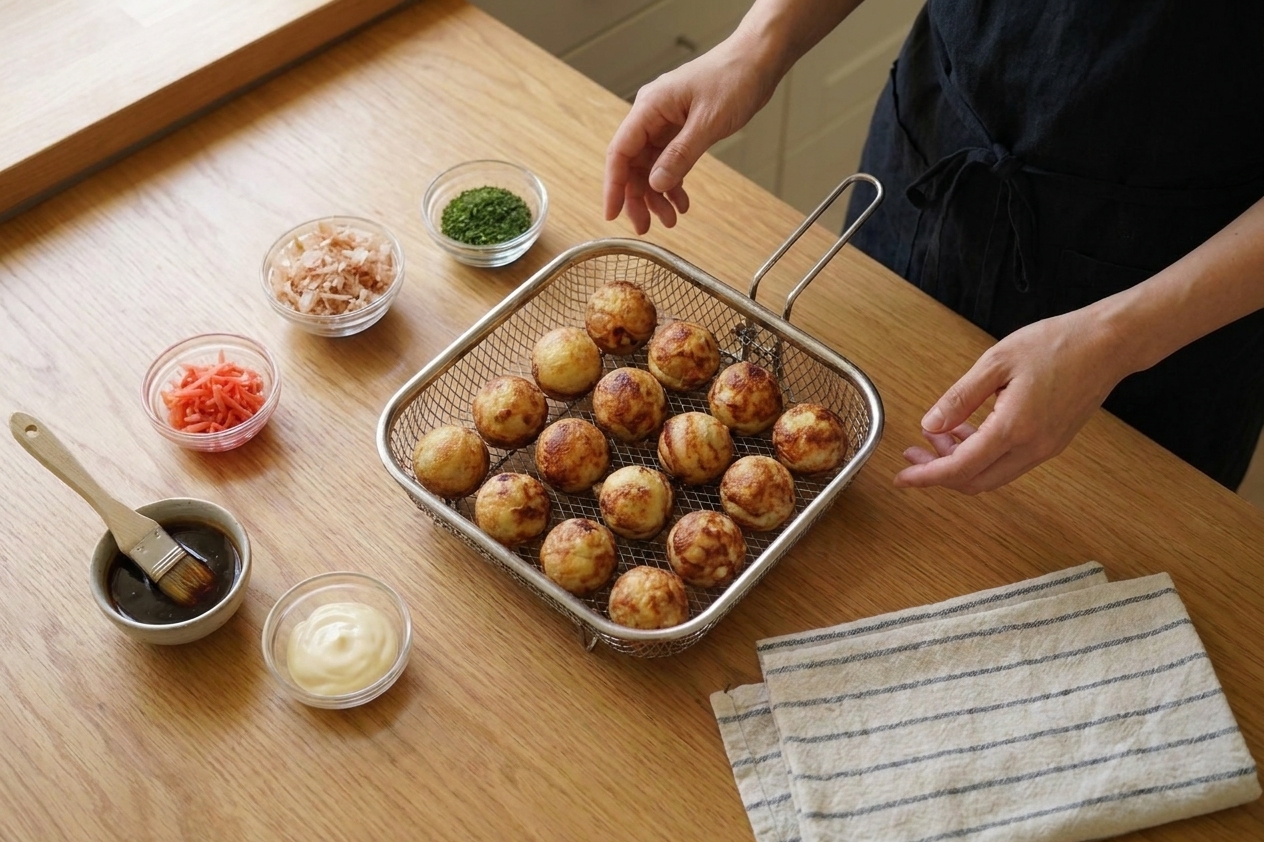
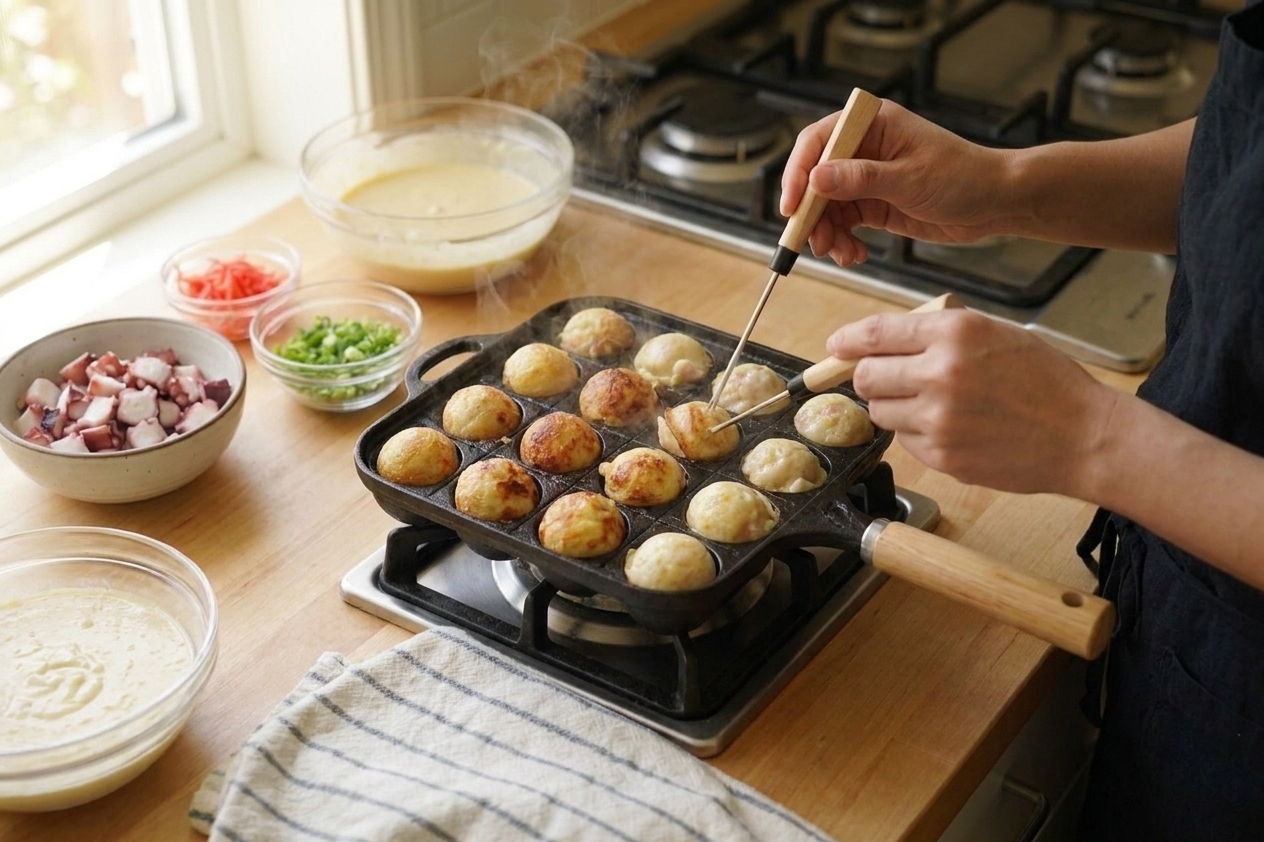
To make true round takoyaki, yes. A takoyaki pan is what gives you the shape and the crisp shell. If you do not have one, you can cook the batter like small pancakes with the same fillings. It will taste great, just not be a ball.
Where do I find octopus?
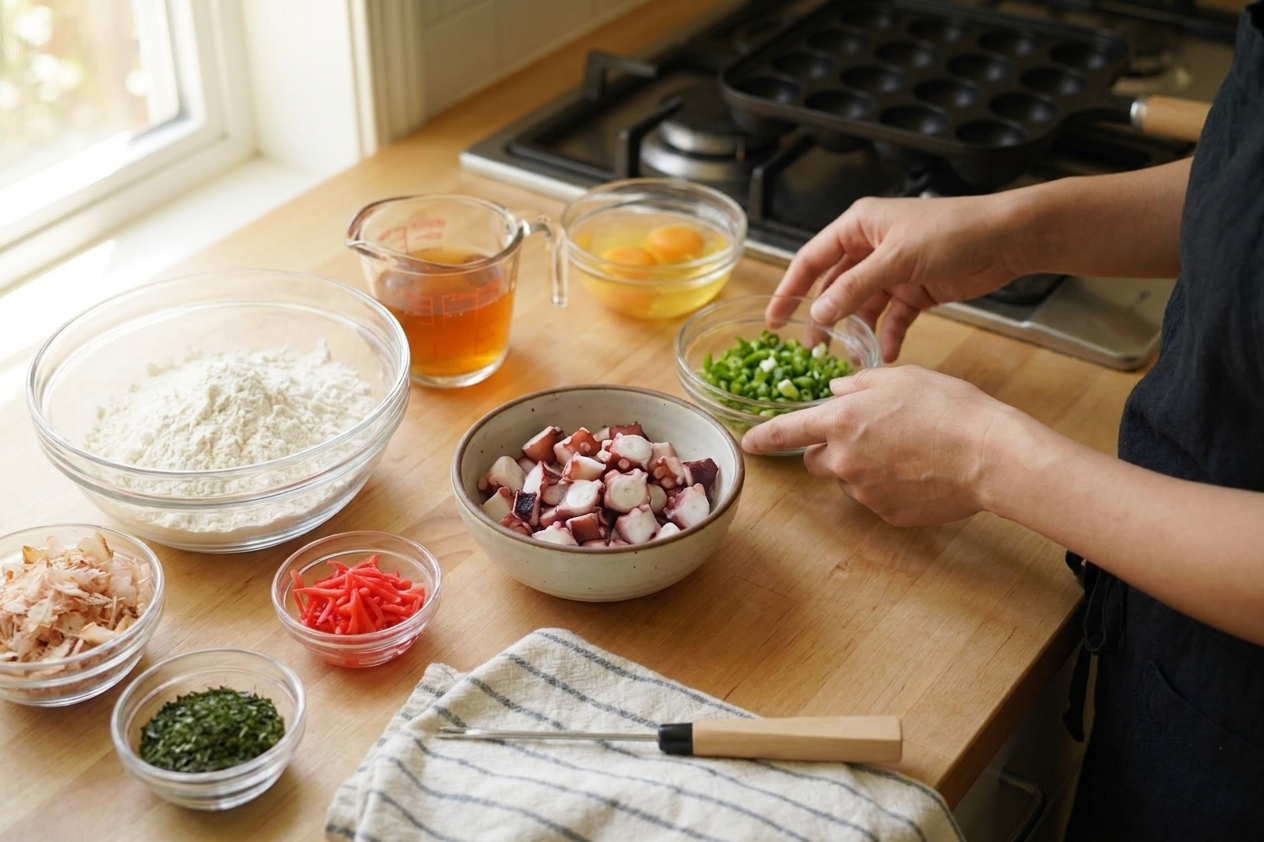
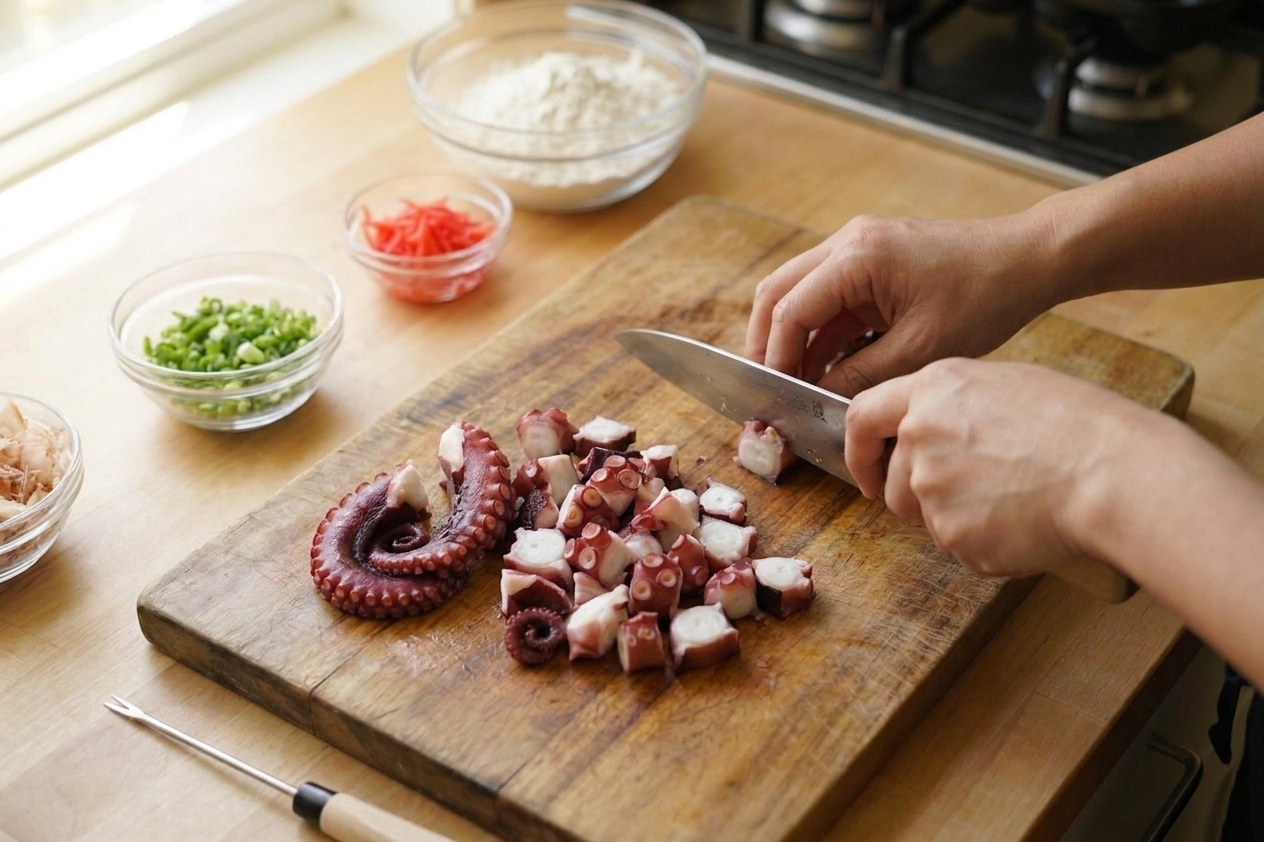
Look for boiled octopus at an Asian grocery, some seafood counters, or in the freezer section. It is usually already cooked. You are mainly heating it through, not cooking it from raw.
What is dashi and can I substitute it?
Dashi is a Japanese broth that tastes lightly smoky and savory. Easiest option is dashi powder mixed with water. If you cannot find it, use low-sodium chicken broth or vegetable broth plus a small pinch of MSG if you use it. The flavor will be different but still delicious.
Why is my takoyaki sticking?
Two usual culprits: not enough oil in the wells, or flipping too early. Oil the pan generously before the first pour and lightly between batches. Let the edges set before you start turning.
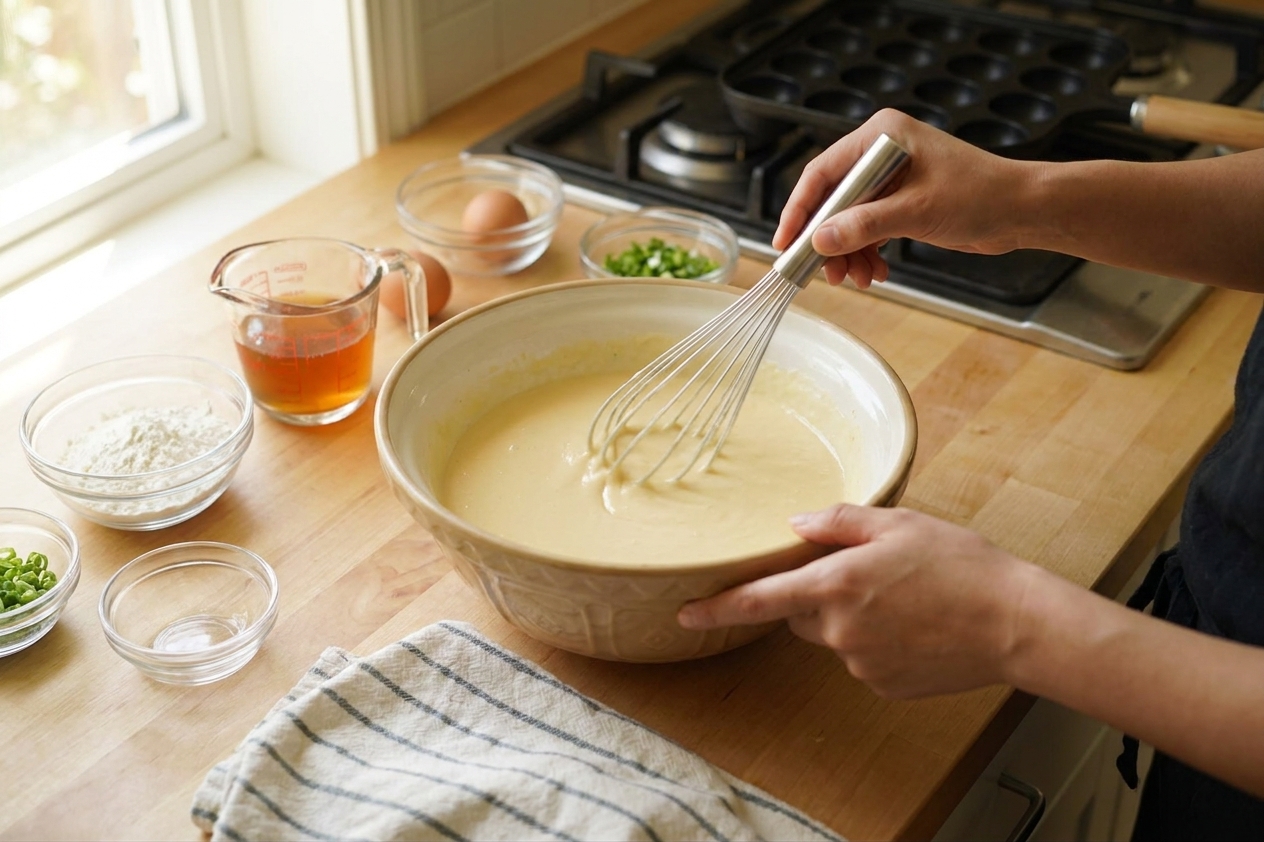
My batter seems thick. What now?
Takoyaki batter should be very thin, closer to heavy cream than pancake batter. If yours looks thicker than that, whisk in 1 to 3 tbsp extra dashi or water until it pours easily.
Why are my balls misshapen or leaking?
This is usually a timing or filling issue. Do not overstuff (one octopus piece per well is plenty), and wait until the outer edge is set before the first turn. If there are gaps after the first rotation, add a tiny drizzle of batter to help seal, then keep rolling.
How do I know when they are done?
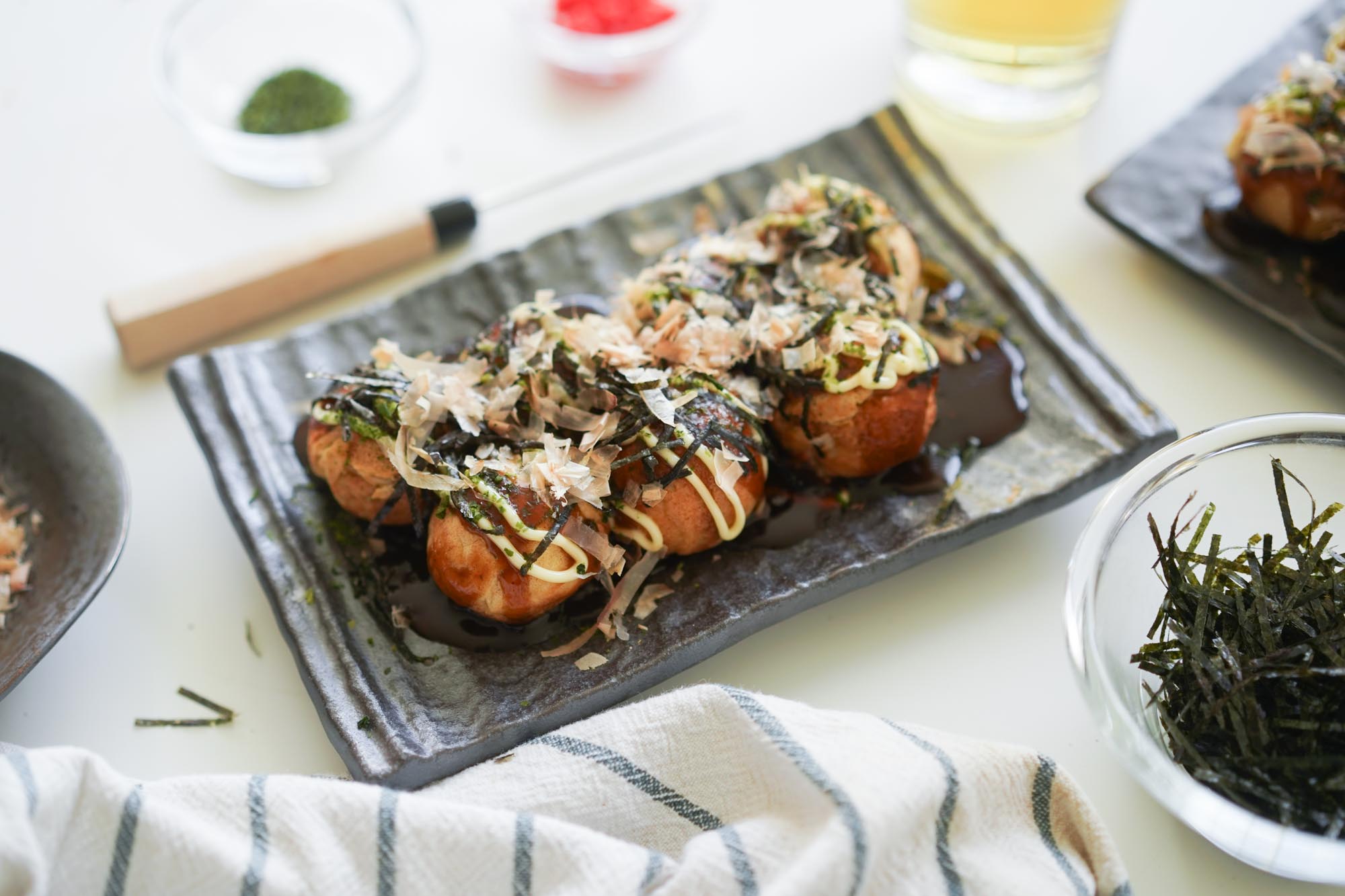
They should be deeply golden with crisp spots, and the center should be hot. Most batches take about 8 to 10 minutes from pour to finished, depending on your pan and heat.