Common Questions
What kind of beef ribs should I buy?
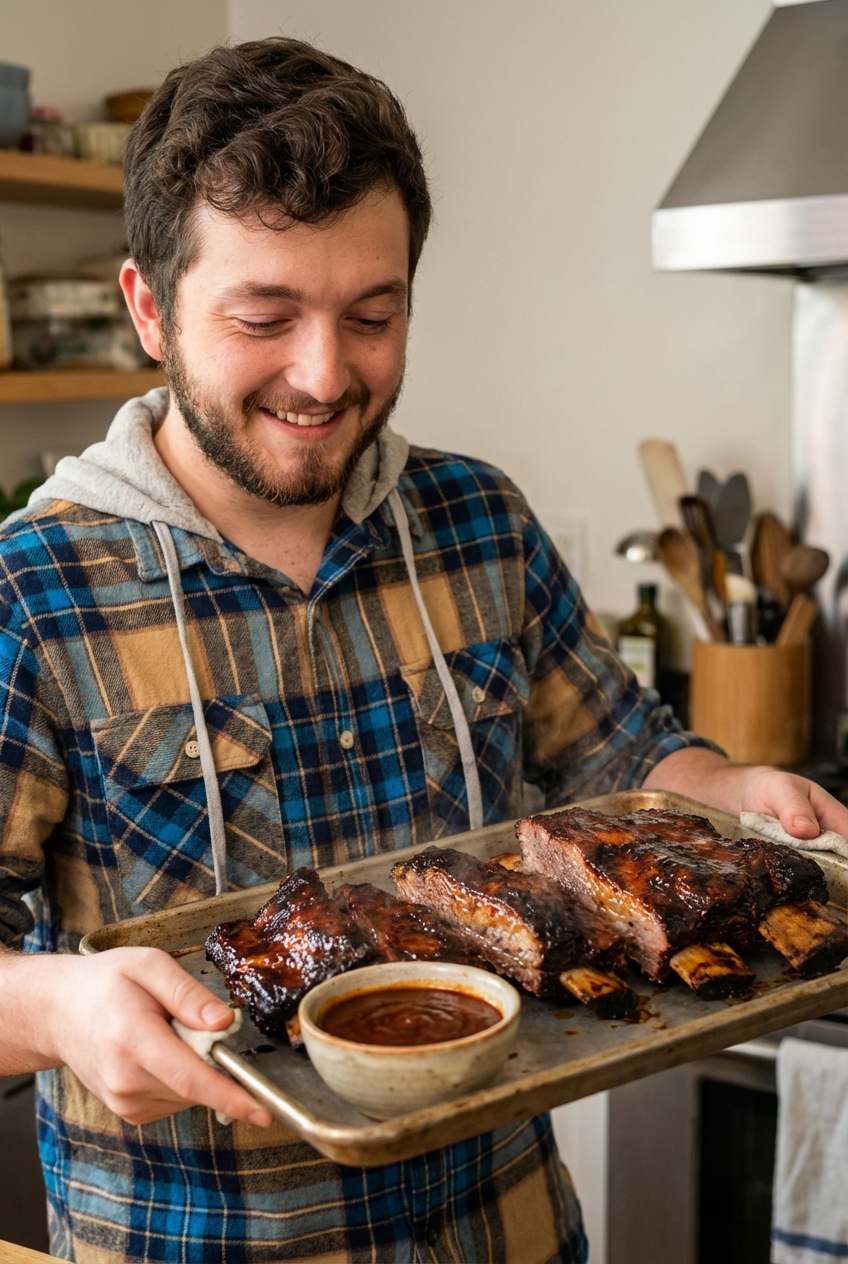
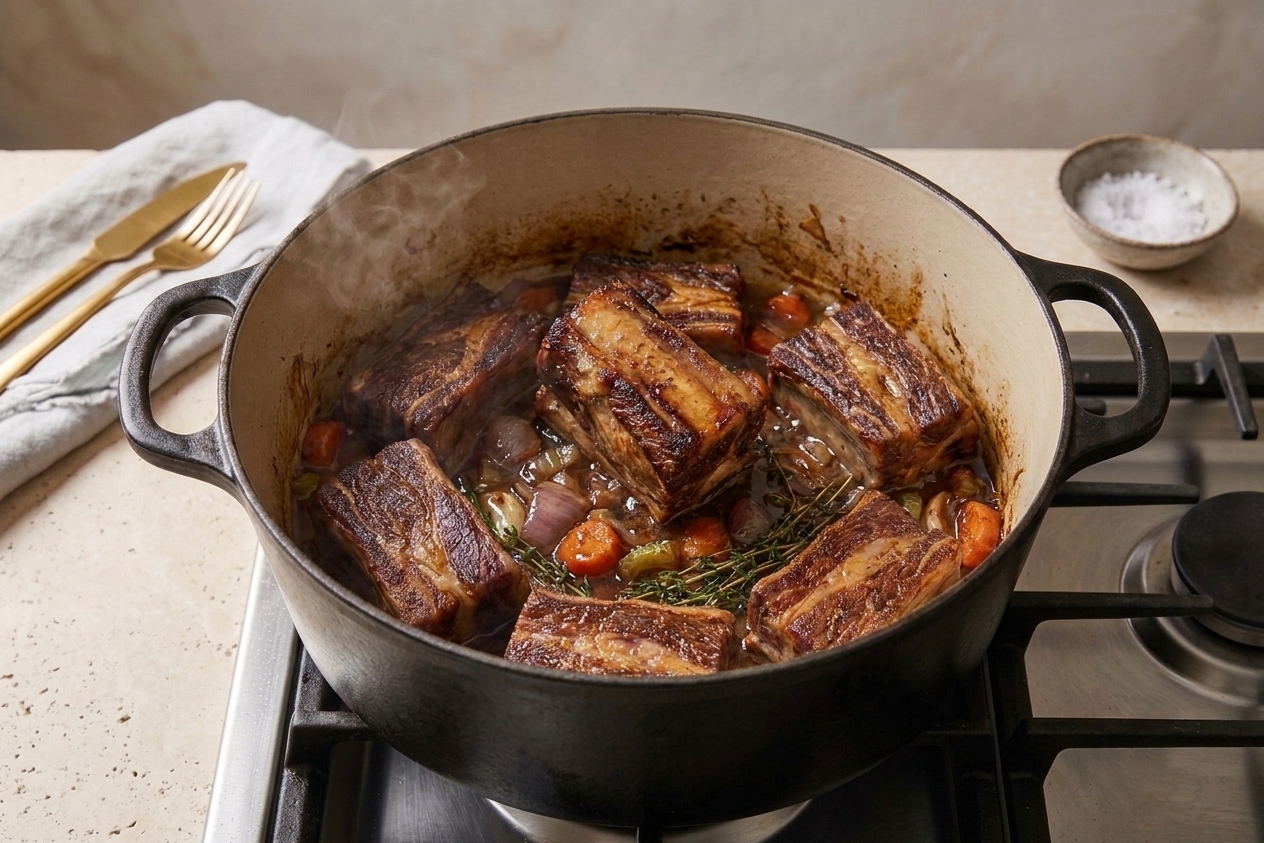
For this recipe, beef back ribs are the most common and cook up beautifully in the oven. If you find English-cut short ribs, they also work, but they are thicker and usually need more covered time (plan on adding 30 to 60 minutes). A deeper pan and an extra splash of broth can help too.
Do I need to remove the membrane?
Yes, if it is still on. The thin silvery membrane on the bone side can turn tough. Slide a butter knife under it and pull with a paper towel for grip.
How do I know the ribs are done?
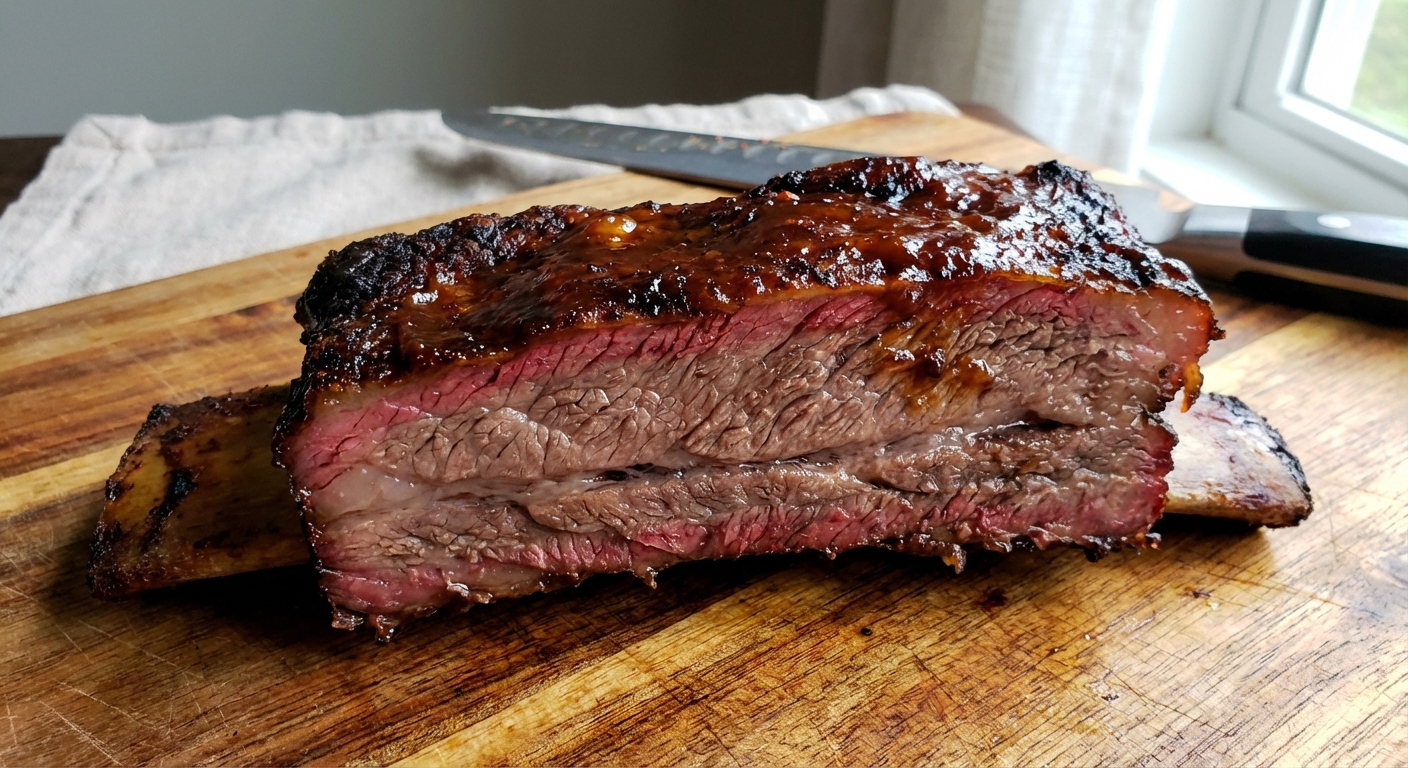
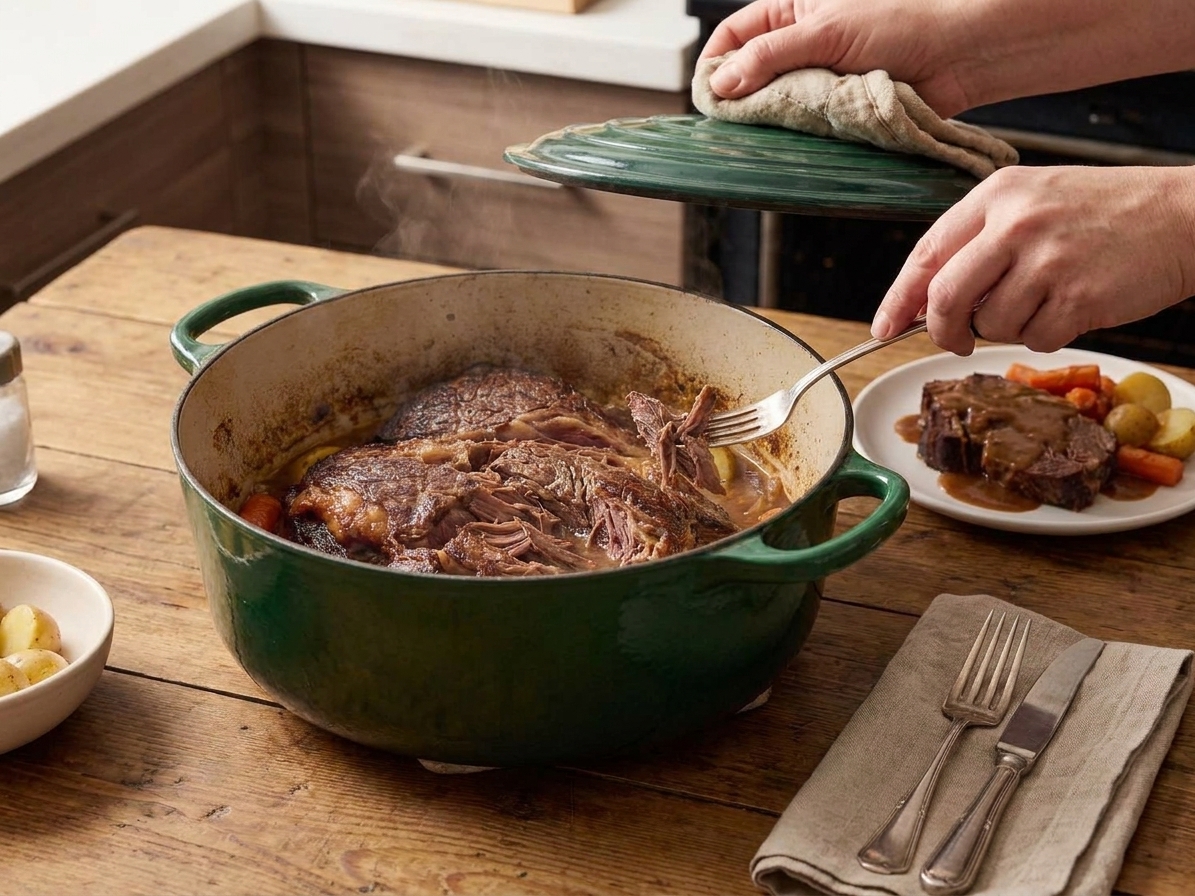
Look for tenderness first. A skewer or knife should slide in with little resistance, and the meat should look relaxed and pulled back from the bones. If you like a temperature guide, aim for about 195°F to 205°F in the thickest part of the meat. Just know back ribs can be thin between bones, so thermometer placement can be tricky. If it is tender, it is done.
Can I make these ahead?
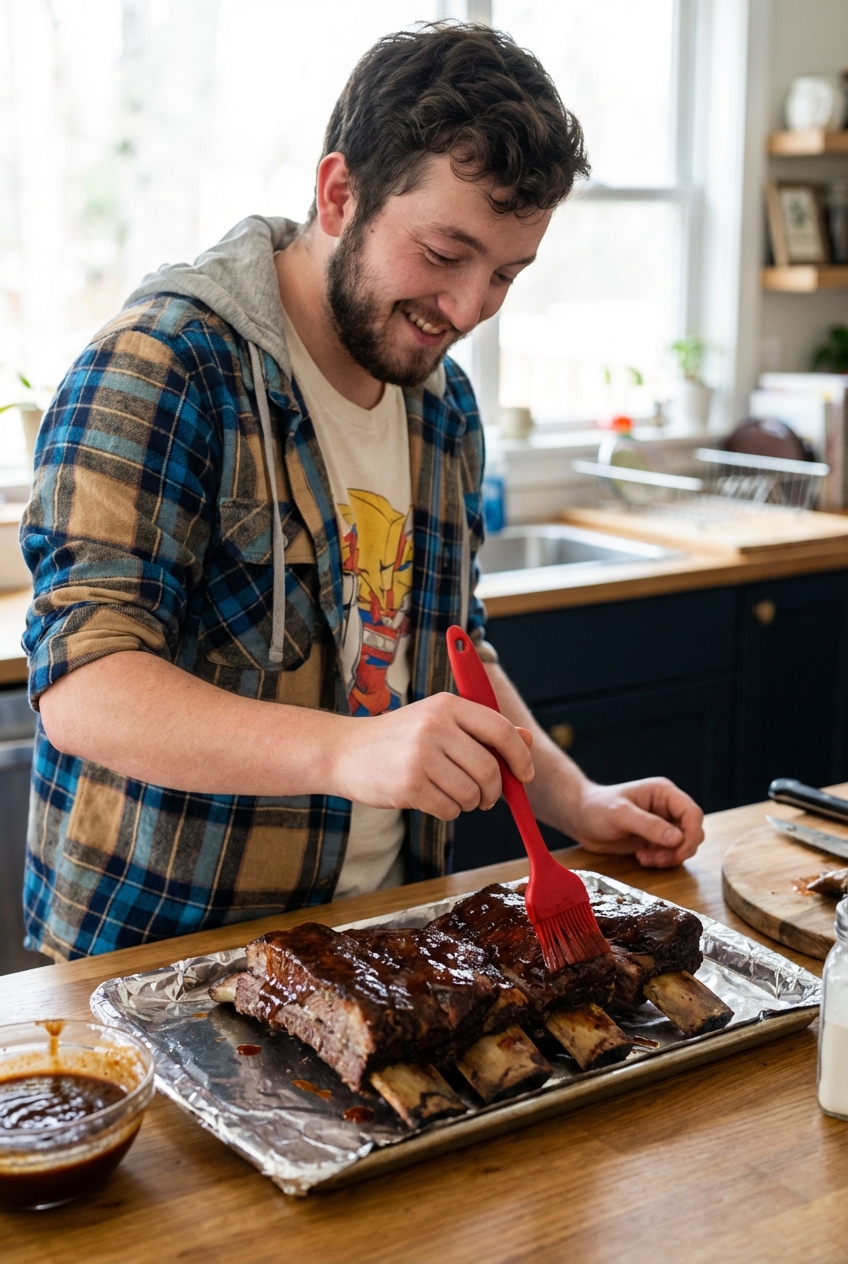
Totally. Bake them covered until tender, cool, then refrigerate. Reheat covered at 300°F, then sauce and broil right before serving for fresh-looking glaze and crisp edges.
My sauce tastes too sweet. How do I fix it?
Add a splash of apple cider vinegar or a squeeze of lemon, plus a pinch of salt. Tang and salt balance sweetness fast.
Do I need to adjust for convection?
If you are using convection, your oven may run a bit hotter. Start checking for tenderness 15 to 20 minutes early, and keep a close eye during the 400°F and broil steps since the glaze can caramelize faster.