Common Questions
Butter or shortening, which is better?
Butter wins for flavor and those crisp, golden edges. Shortening can be easier to handle and tends to be more neutral in flavor. This recipe sticks with all-butter and uses a couple tricks (cold temp, a little vinegar, proper rest) so it still rolls nicely.
Why add vinegar?
Vinegar helps the dough stay tender and easier to handle. It can slightly mellow gluten development, but think of it as a small assist, not a magic spell. You won’t taste it.
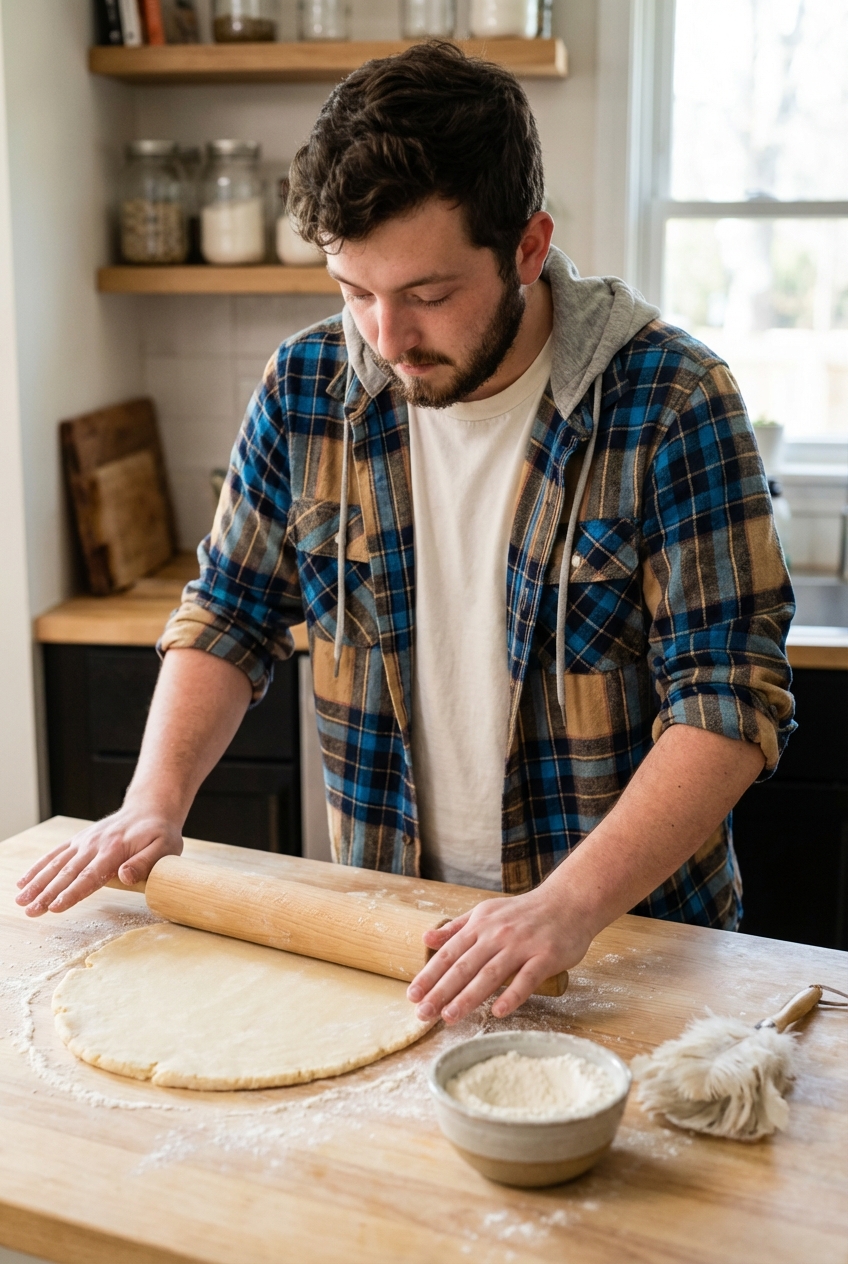
My dough is cracking when I roll it. What do I do?
Cracking usually means the dough is too cold or a touch under-hydrated. Let it warm up for 5 to 10 minutes, then roll again. If it still crumbles, mist with 1 teaspoon ice water, knead gently just to bring it together, and rest 15 minutes.
My dough is sticky. Did I ruin it?
Nope. Dust the counter and rolling pin with flour and keep rolling. If it’s very soft, chill the dough 10 to 15 minutes before continuing.
Why does my crust shrink or slump?
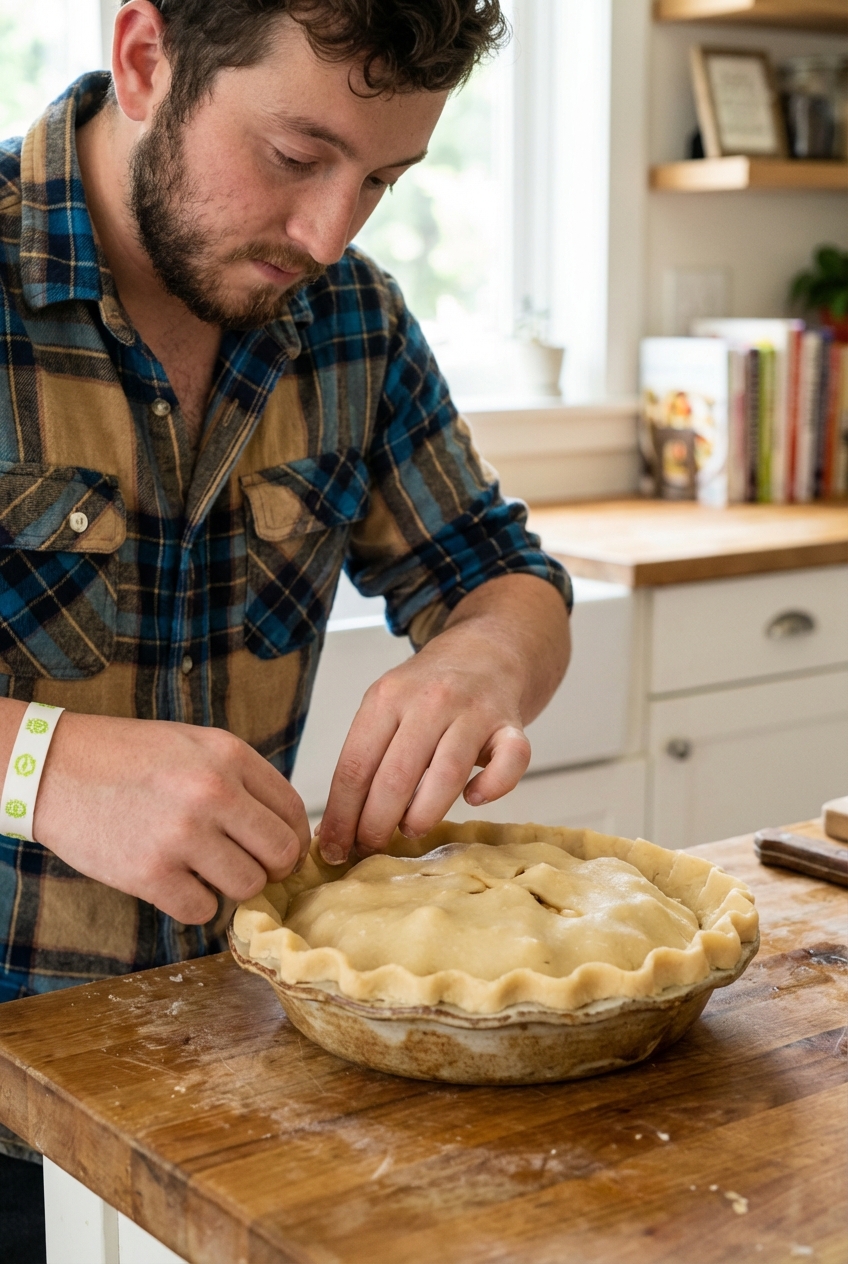
- Don’t stretch the dough when you move it into the pan. Lift and settle it.
- Let it rest after rolling and shaping. A good chill helps it relax and hold its shape.
- Chill before baking, especially for blind bakes.
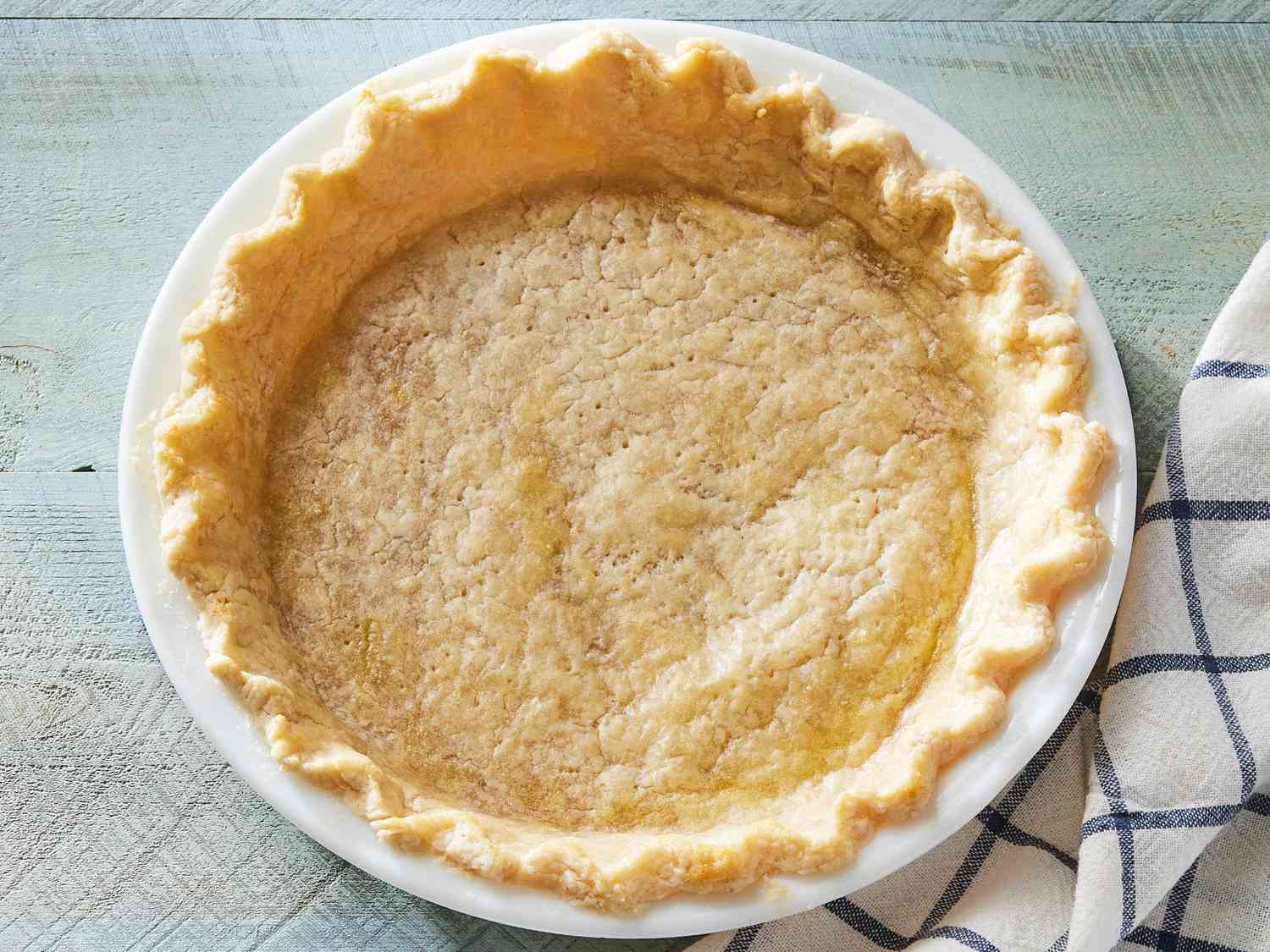
Should I blind bake this crust?
Blind bake for custard pies (pumpkin, pecan, chocolate cream) and any filling that’s very wet. For fruit pies that bake a long time, you can often skip full blind baking, but I still like chilling the shaped crust first.
How do I prevent a soggy bottom?
- Chill the shaped crust before baking.
- Bake on a preheated sheet pan or baking steel.
- For very juicy fruit, toss with enough thickener and let it sit 10 minutes so you can see how much liquid you’re working with.