Common questions
What cut of lamb works best for Lancashire hotpot?
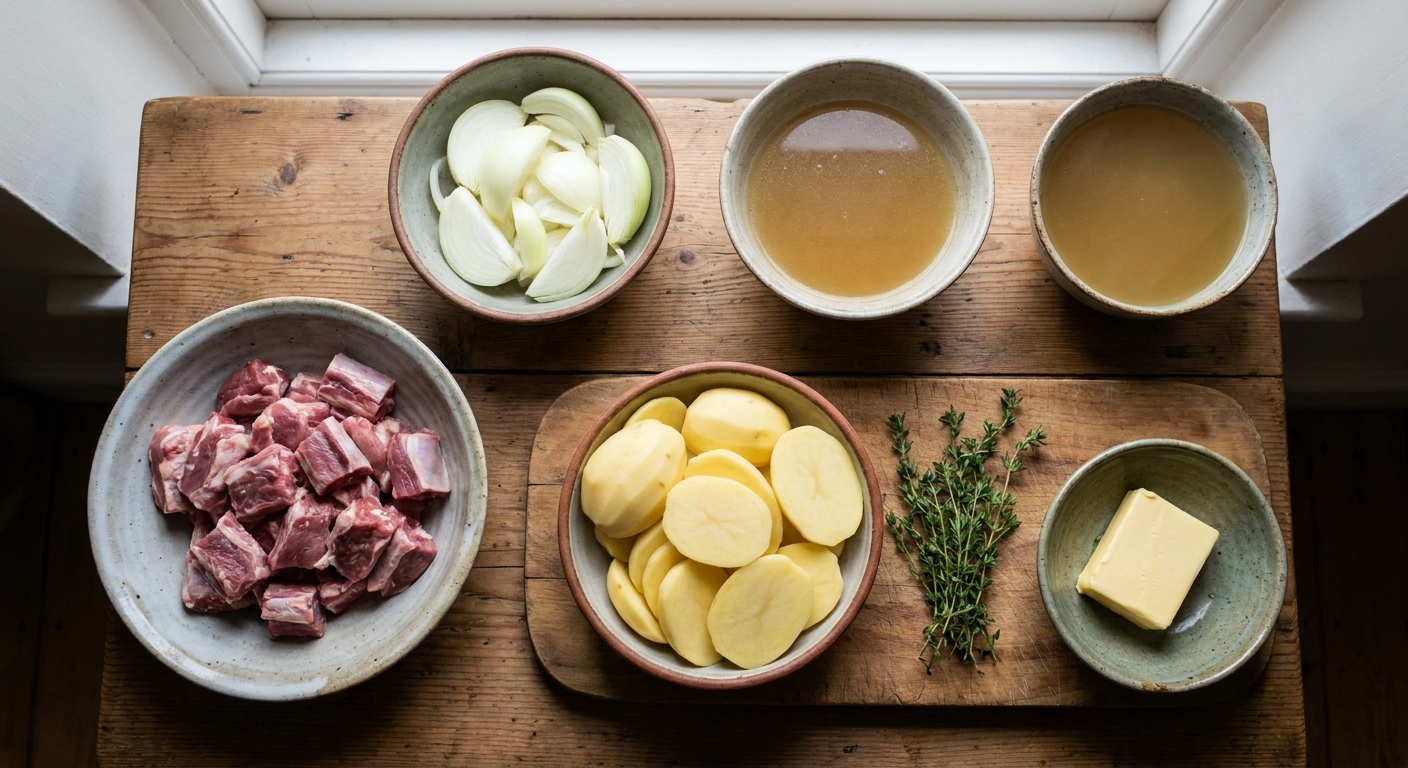
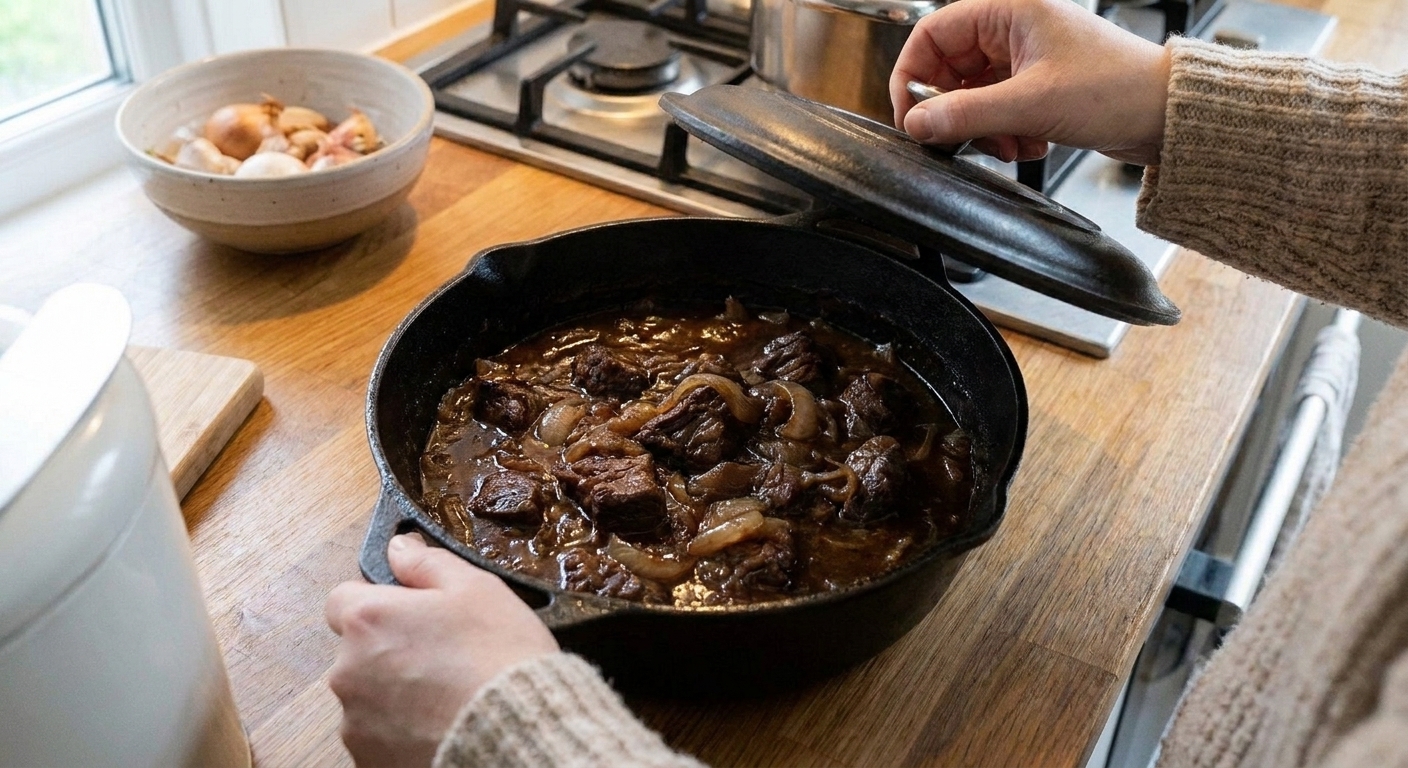
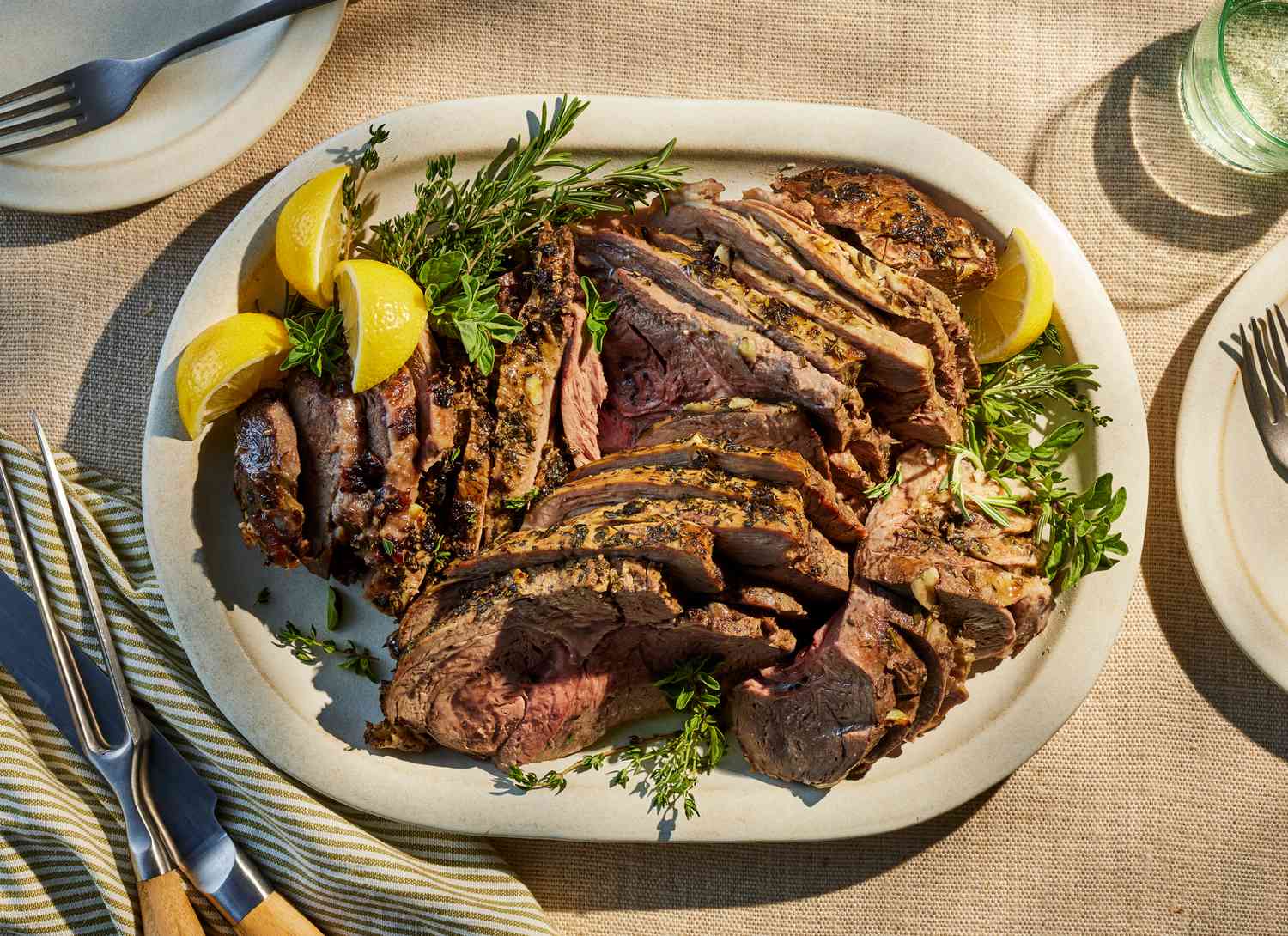
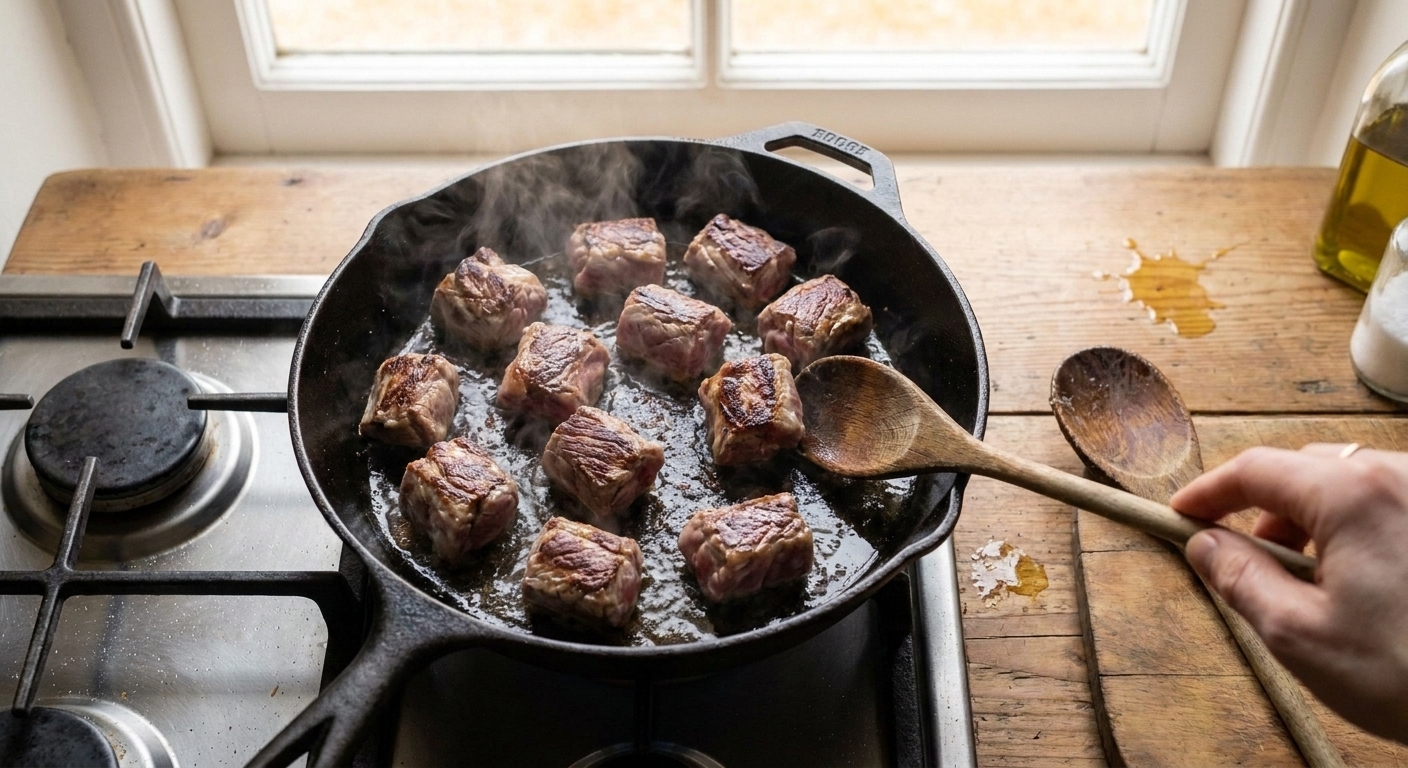
Look for a slow cooking cut that becomes tender with time, like lamb shoulder or lamb neck. If you have lamb stew meat, that can work too, but shoulder tends to stay juicier.
Is this a traditional Lancashire hotpot?
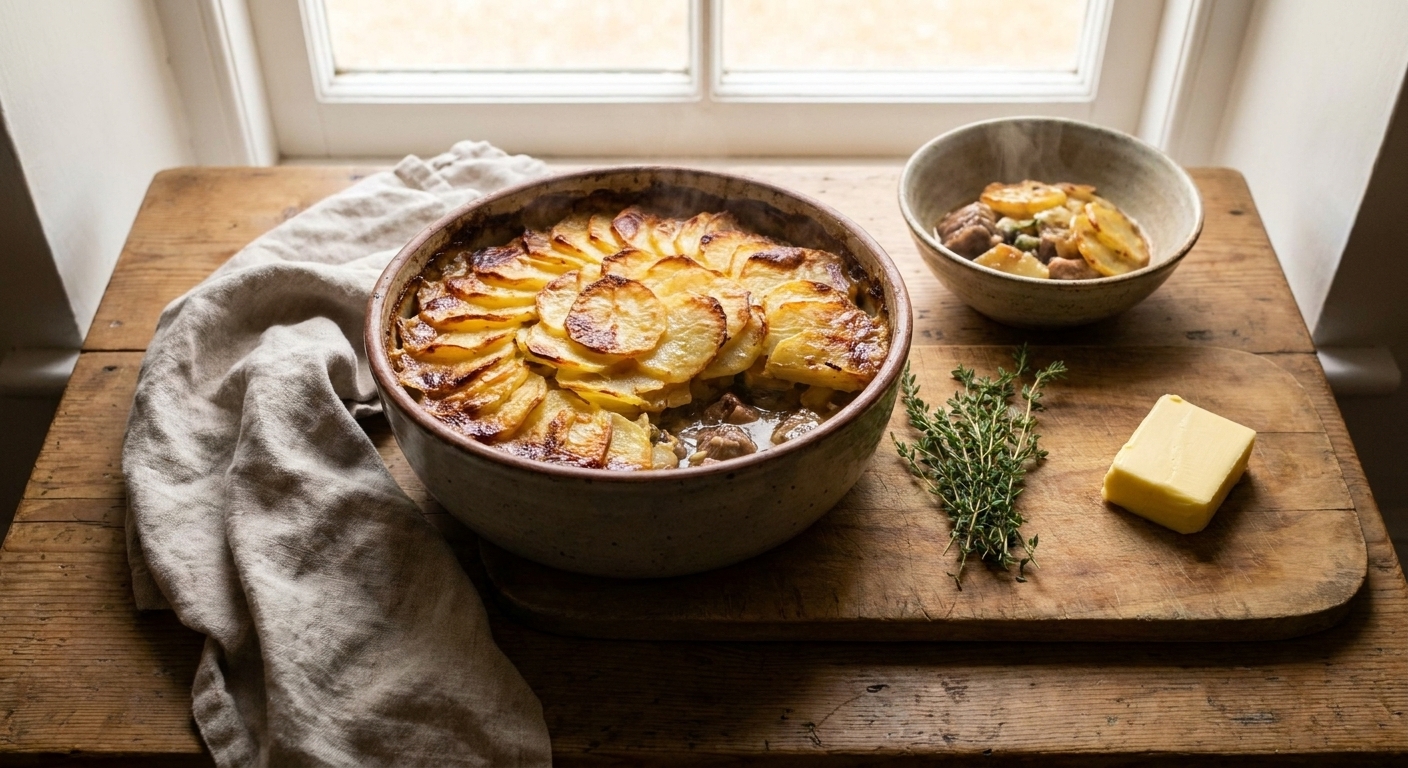
The heart of it is classic: lamb, onions, and a potato lid. I list carrots and Worcestershire as optional because they are cozy additions many modern cooks love, but they are not in every old school version.
How thick should I slice the potatoes?
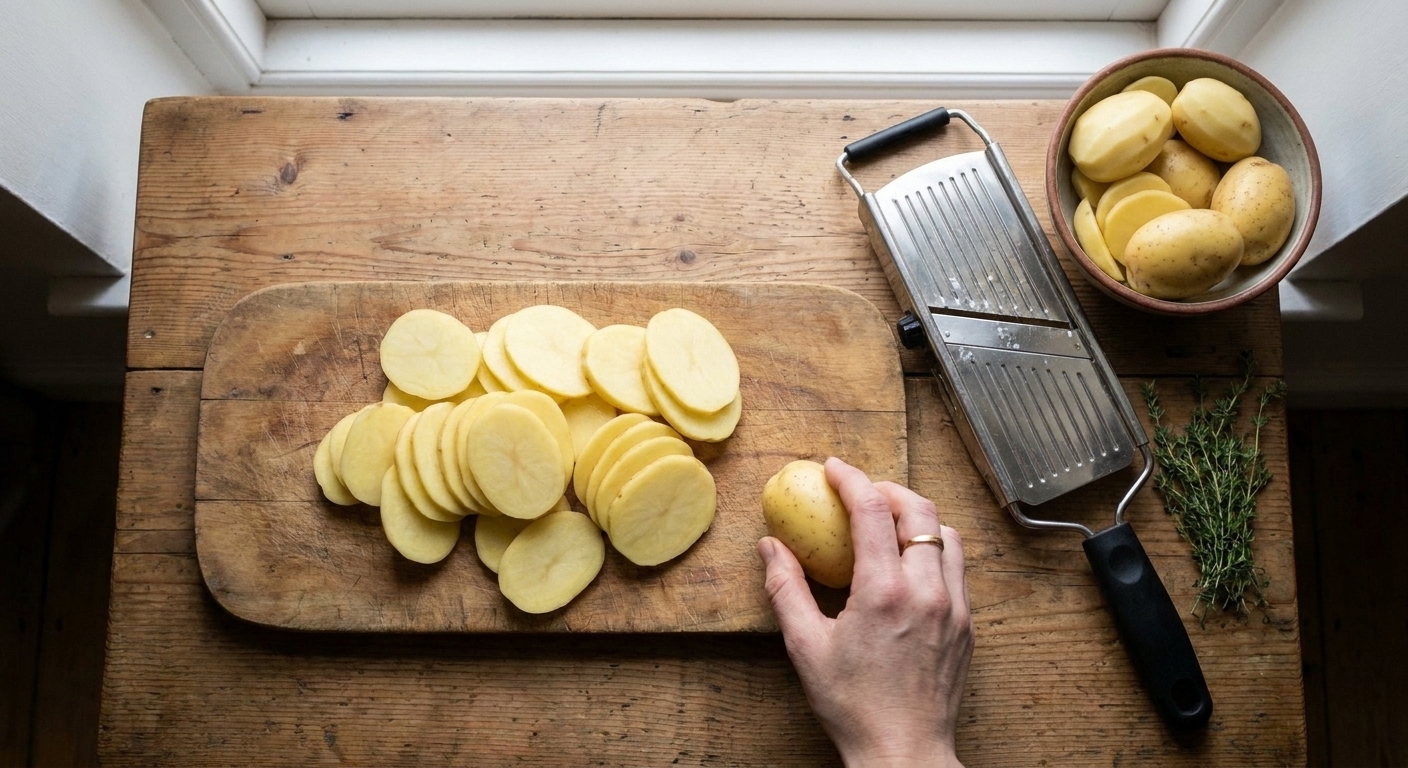
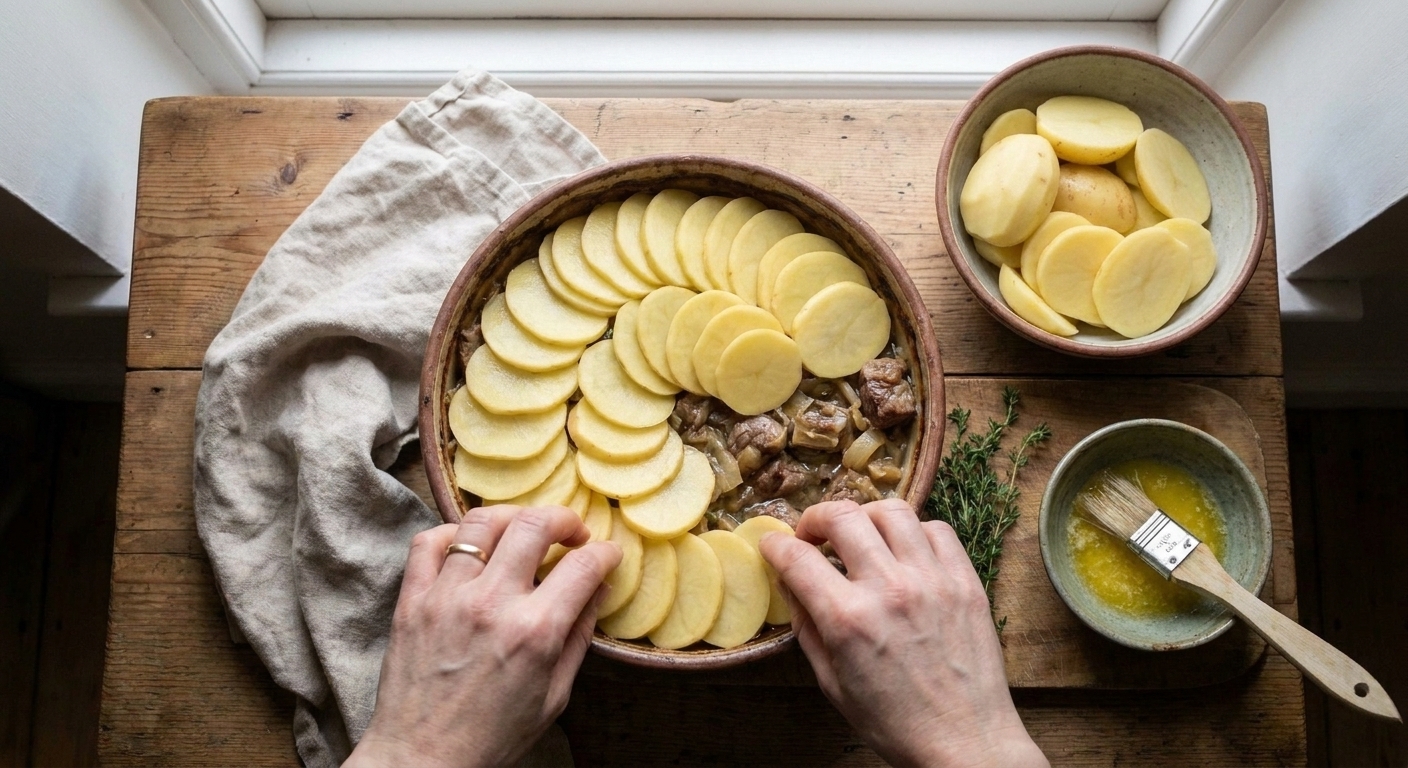
Aim for about 1/8 inch thick. Too thin and they can dry out and break apart. Too thick and the top layer can take longer to soften, leaving you with a browned crust over firm potatoes.
How much stock should I add?
Pour in stock until it reaches about three quarters of the way up the meat and onion layer, but does not touch the top potato layer. As a rough cue, the liquid should sit about 1/2 to 1 inch below the potatoes, depending on your dish. The goal is for the potatoes to steam while the lamb and onions braise underneath. If the liquid covers the potatoes, the top tends to boil and stay pale.
Why is my potato topping not browning?
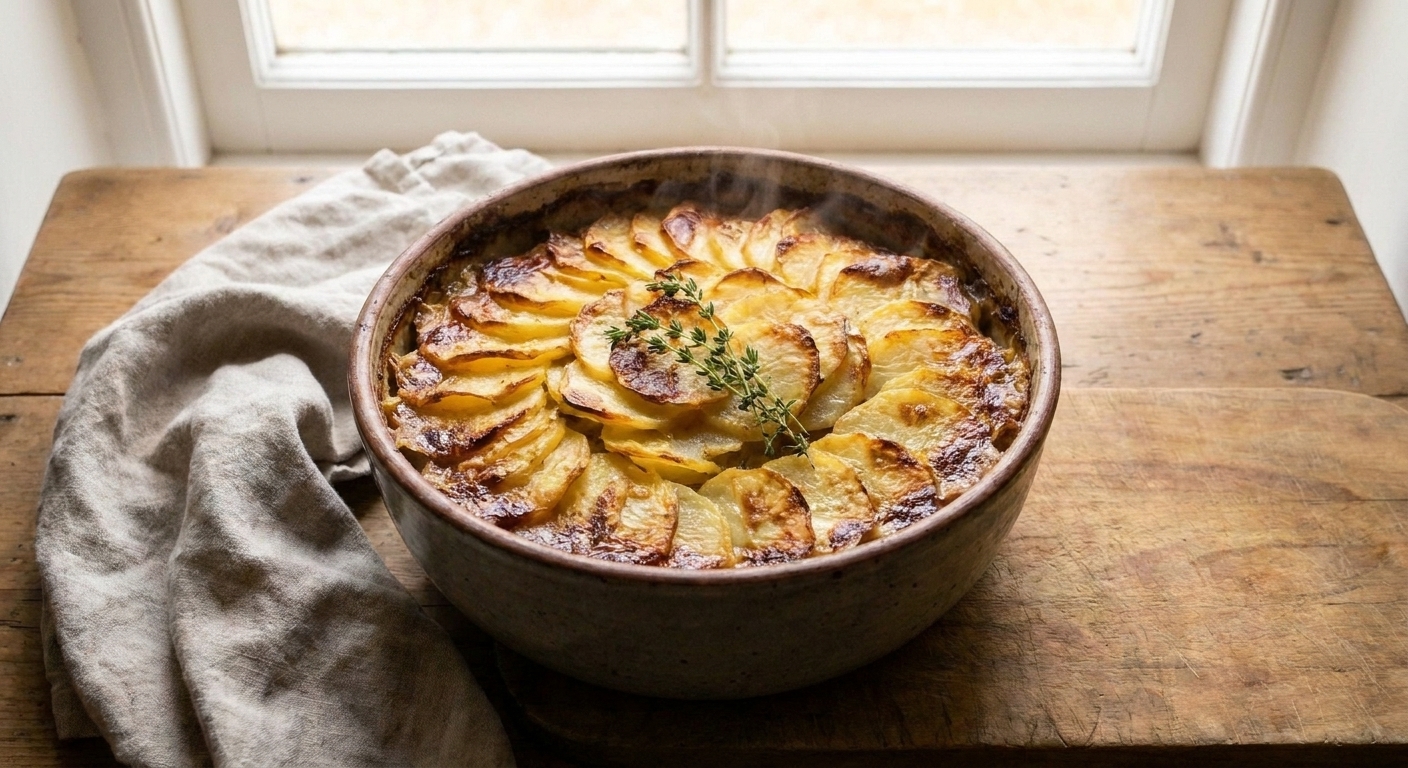
Three usual culprits: the dish stayed covered too long, the oven is running cool, or the potatoes are too wet. Uncover for the final browning stretch, brush with butter, and if needed, finish with a quick broil while you watch closely.
Can I make Lancashire hotpot ahead of time?
Yes. You can assemble the layers, cover, and refrigerate for up to 24 hours. Let the dish sit at room temperature for about 20 to 30 minutes before baking so it heats more evenly.