Mom's Best Recipes
Recipe

Sheet Pan Honey Mustard Salmon

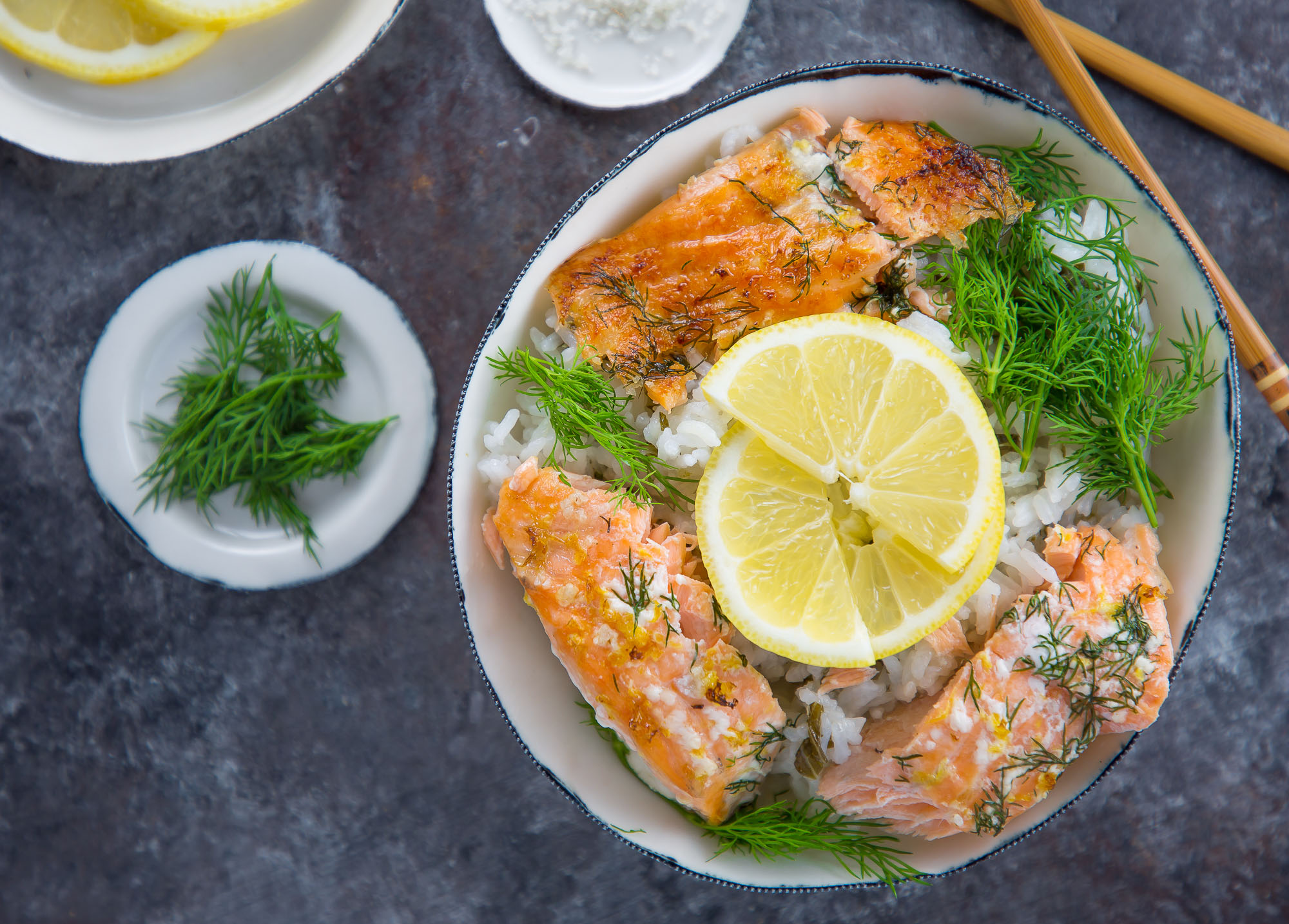
Sweet, tangy honey mustard glaze with crisp-edged salmon, roasted baby potatoes, and snappy green beans, all cooked on one pan.

Author By Matt Campbell
4.8
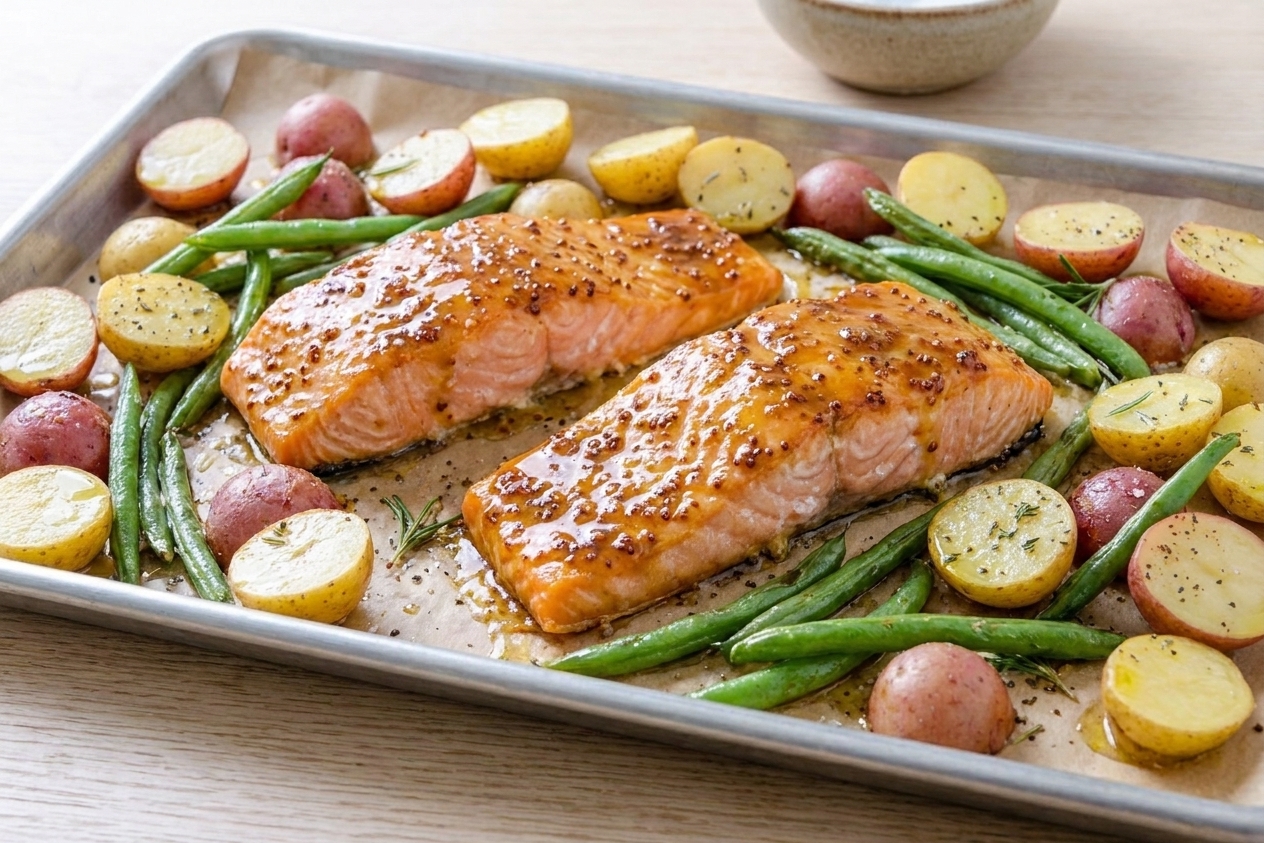
A sheet pan of roasted salmon fillets glazed with honey mustard beside blistered green beans and golden baby potatoes on parchment, warm kitchen lighting

If you have ever stared into your fridge and thought, “I want something healthy-ish but I also want it to taste like I actually tried,” this sheet pan honey mustard salmon is the move.

You get glossy, sweet-tangy glaze that caramelizes at the edges, plus crispy little potatoes and green beans that come out blistered and snappy. It is one pan, minimal cleanup, and the kind of dinner that makes a Tuesday feel like it has a soundtrack.

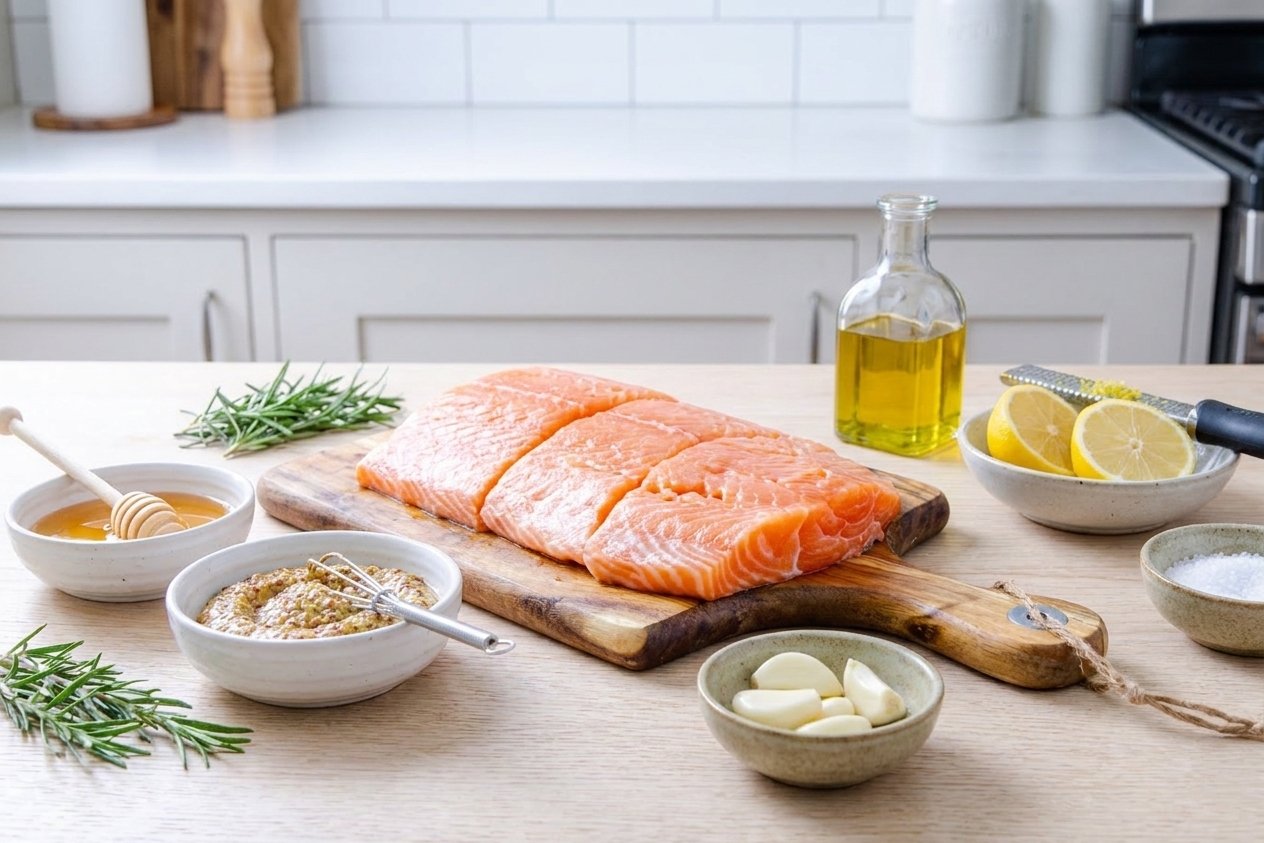
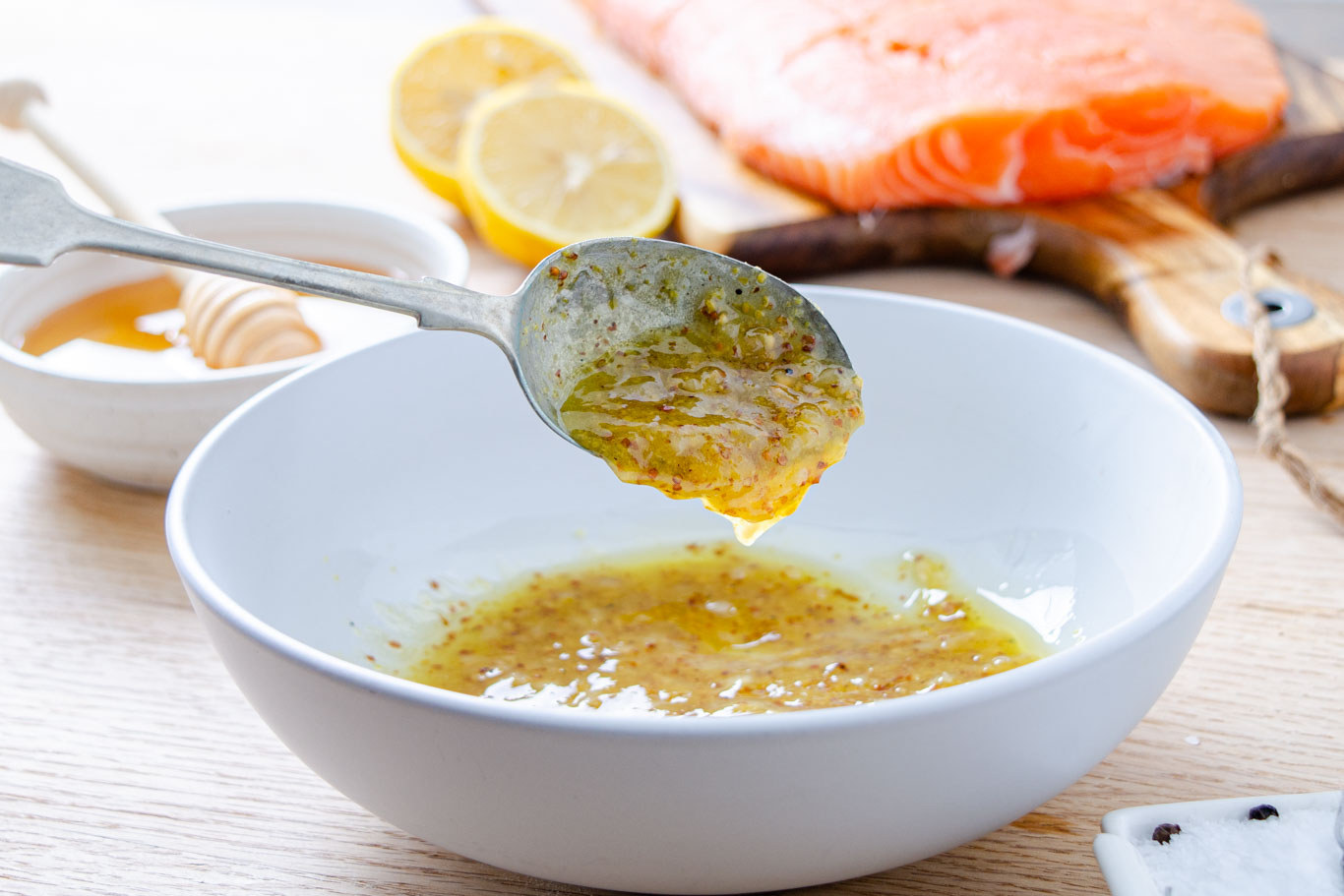
Salmon fillets on a cutting board with small bowls of honey, Dijon mustard, garlic, lemon, and olive oil arranged on a tidy kitchen counter

Why It Works

  • High flavor, low effort: Honey + Dijon + a little whole grain mustard gives you sweet, tangy, and just enough bite with pantry staples.
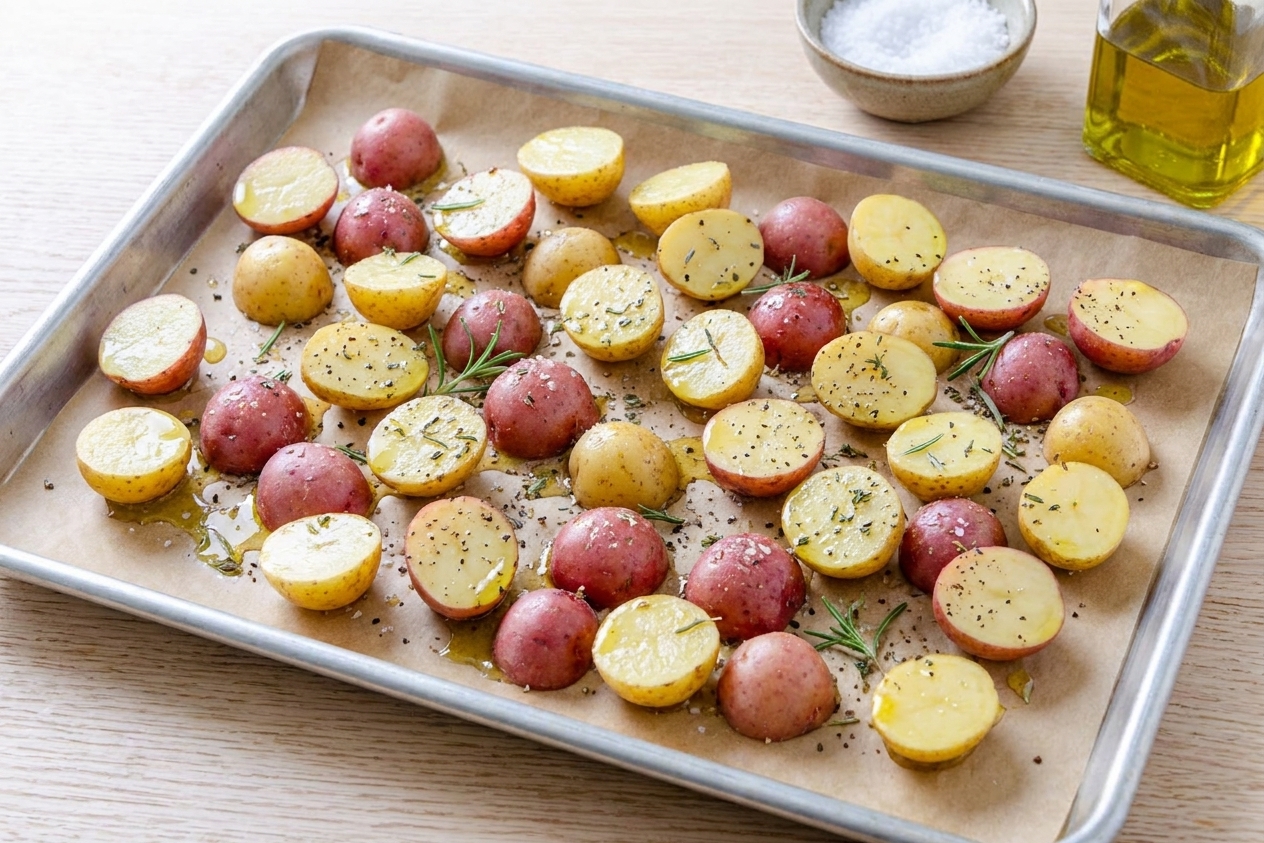
  • Crisp edges without drying the fish: Potatoes get a head start so the salmon only cooks as long as it needs.
  • One glaze, two jobs: It seasons the salmon and becomes a quick finishing sauce with a squeeze of lemon.
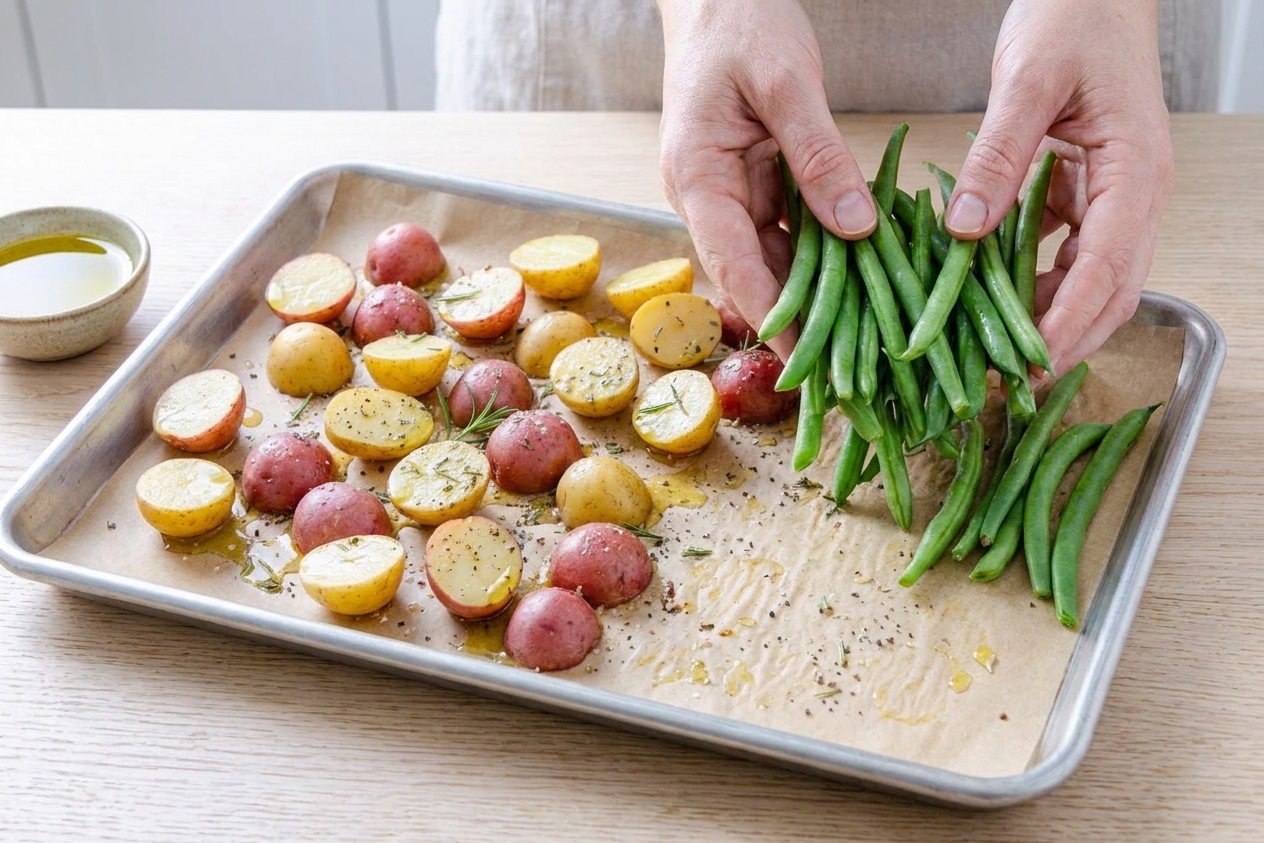
  • Flexible veg: Green beans are weeknight-easy, but you can swap in broccoli, asparagus, or Brussels sprouts without rewriting your life.

Pairs Well With

Storage Tips

Refrigerate: Store salmon, potatoes, and green beans in airtight containers for up to 3 days. If you can, keep salmon separate so it does not steam itself into sadness.

Reheat: For best texture, reheat on a sheet pan at 325°F for 8 to 12 minutes until just warm. Microwave works in a pinch, but go at 50 percent power to avoid drying the fish.

Cold leftover hack: Flake the salmon and toss it into a salad with cucumbers and extra lemon. Add a tiny spoon of mustard to your vinaigrette and it all clicks.

Common Questions

Can I use frozen salmon?

Yes, but thaw it first for even cooking and better glaze adhesion. Thaw overnight in the fridge, or seal it in a bag and submerge in cold water for about 30 to 45 minutes (or until fully thawed). Pat it very dry before glazing.

How do I know when salmon is done?

The center should flake easily and look opaque. If you use a thermometer, aim for 120°F to 125°F for moist, restaurant-style salmon, or 130°F if you prefer it more done. USDA guidance is 145°F, so cook to the temperature you are comfortable with. It will carry over a little after you pull it.

Will the honey burn?

It usually will not at 425°F for the short salmon cook time, especially with the glaze brushed on in two layers. Ovens vary, though, and honey can scorch fast under the broiler. If you broil, do it for 1 minute at a time and watch closely.

What can I use instead of Dijon?

Spicy brown mustard works great. Yellow mustard will taste sharper and less creamy, so add an extra teaspoon of honey to balance it.

Can I make this without potatoes?

Absolutely. Swap potatoes for quick-cooking veg like broccoli florets or asparagus and start everything at the same time. The total cook time drops to about 12 to 15 minutes.

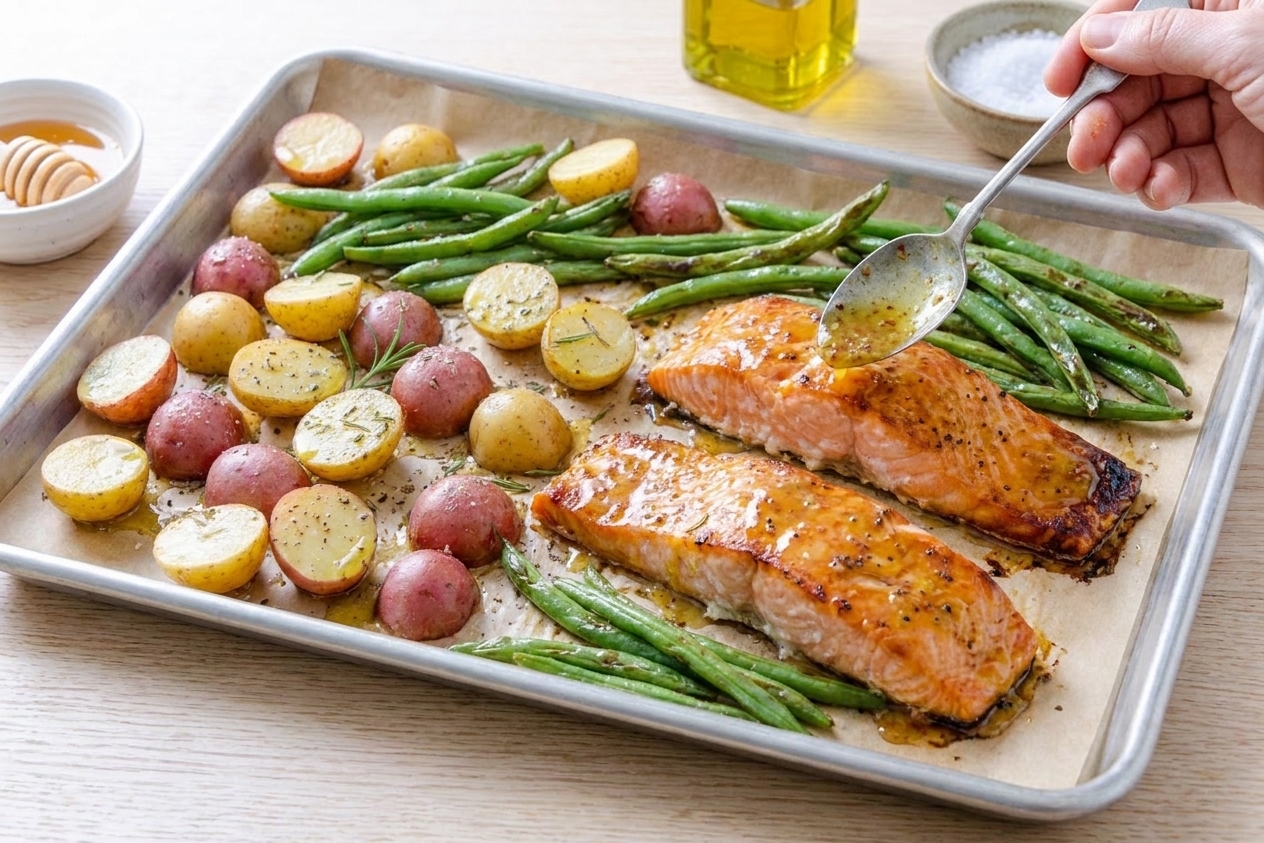
This is the dinner I make when I want to feel like I have my life together without actually doing the most. Honey mustard is one of those flavors that hits nostalgia and “chef-y enough” at the same time. The first time I tested it on salmon, I kept brushing on “just a little more glaze” like that was a responsible choice. It was not. It was delicious.

Now I do it the smart way: a layer before baking, a clean little reserved scoop at the end, and a squeeze of lemon that wakes everything up. One pan, loud flavors, and you can still be on the couch before your show’s recap is over.