Can I use frozen salmon?
Yes, but thaw it first for even cooking and better glaze adhesion. Thaw overnight in the fridge, or seal it in a bag and submerge in cold water for about 30 to 45 minutes (or until fully thawed). Pat it very dry before glazing.
How do I know when salmon is done?
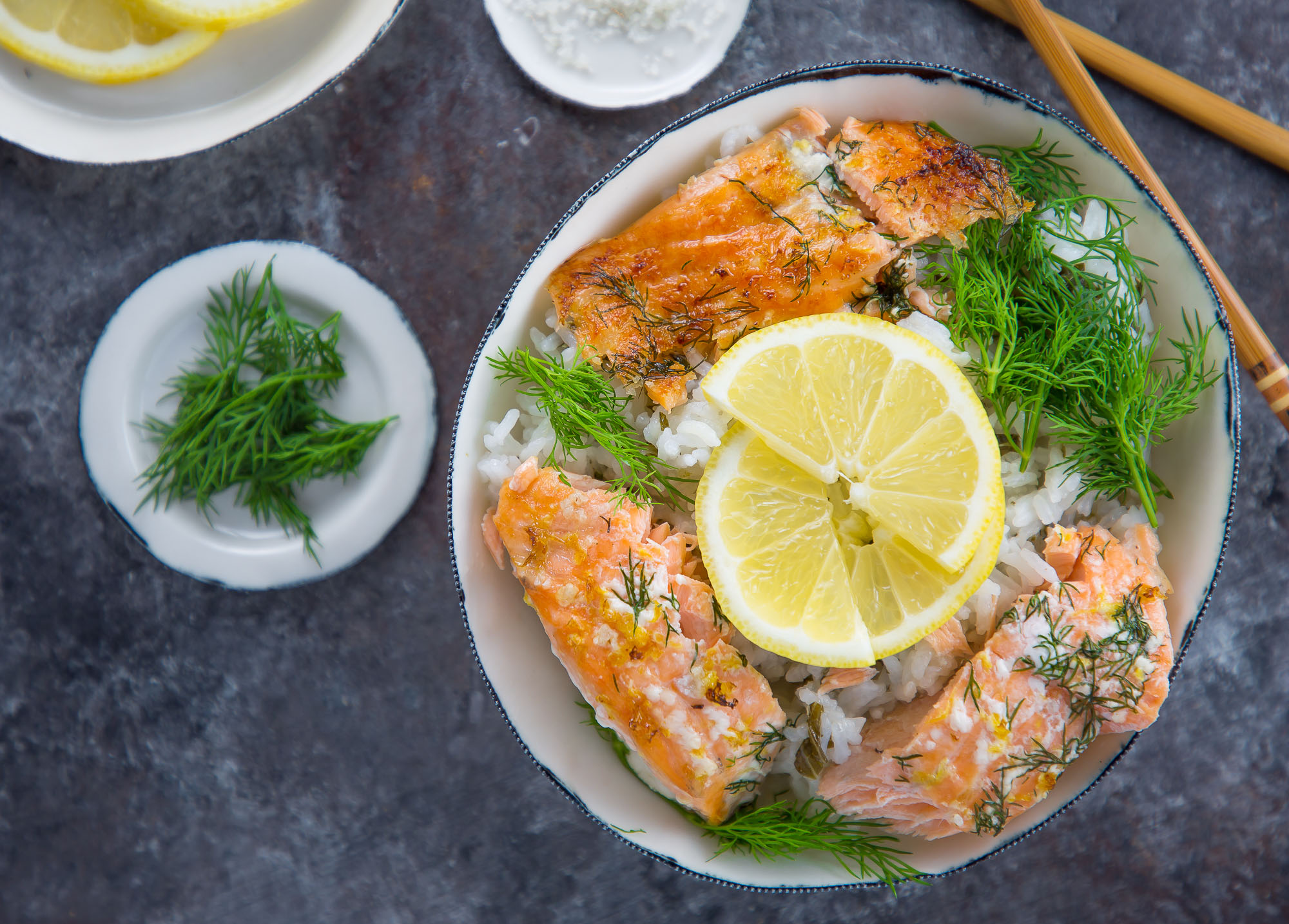
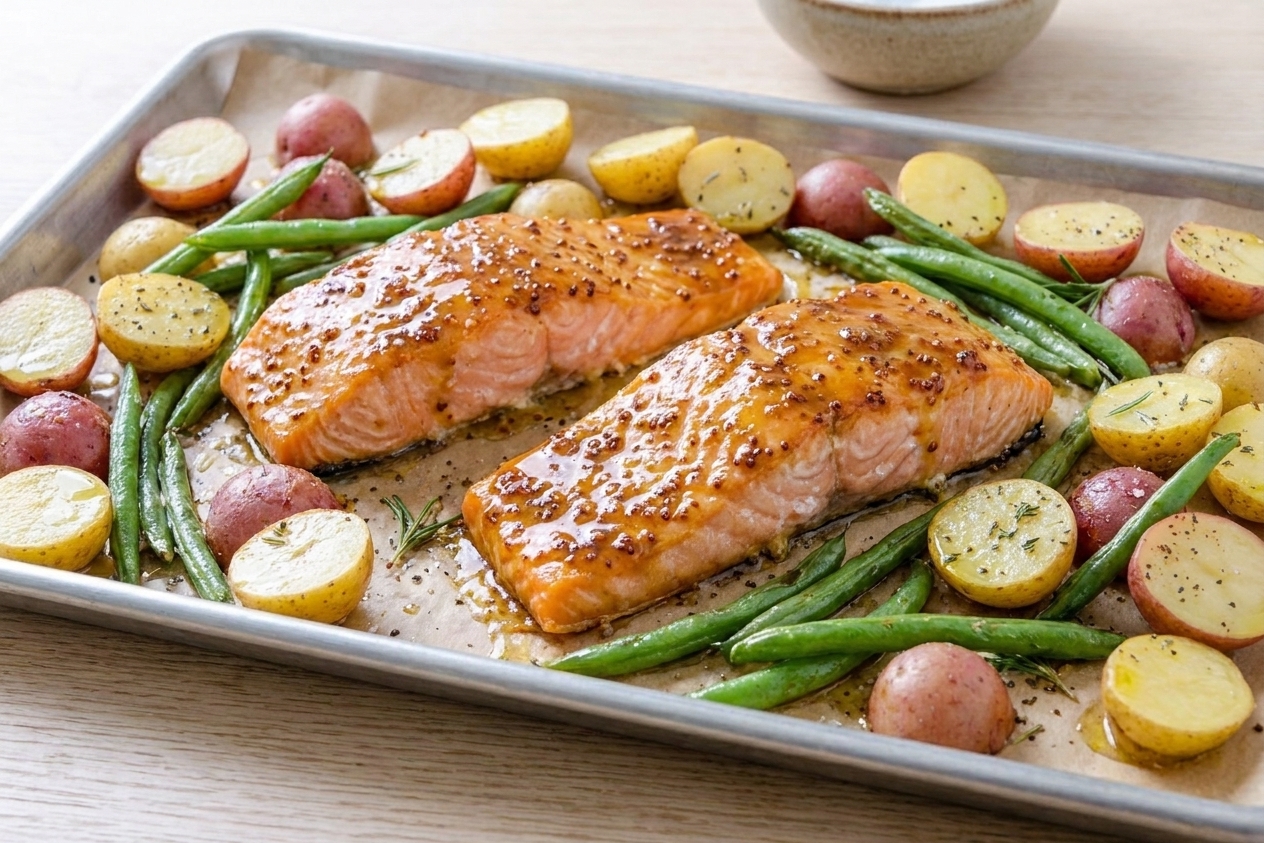
The center should flake easily and look opaque. If you use a thermometer, aim for 120°F to 125°F for moist, restaurant-style salmon, or 130°F if you prefer it more done. USDA guidance is 145°F, so cook to the temperature you are comfortable with. It will carry over a little after you pull it.
Will the honey burn?
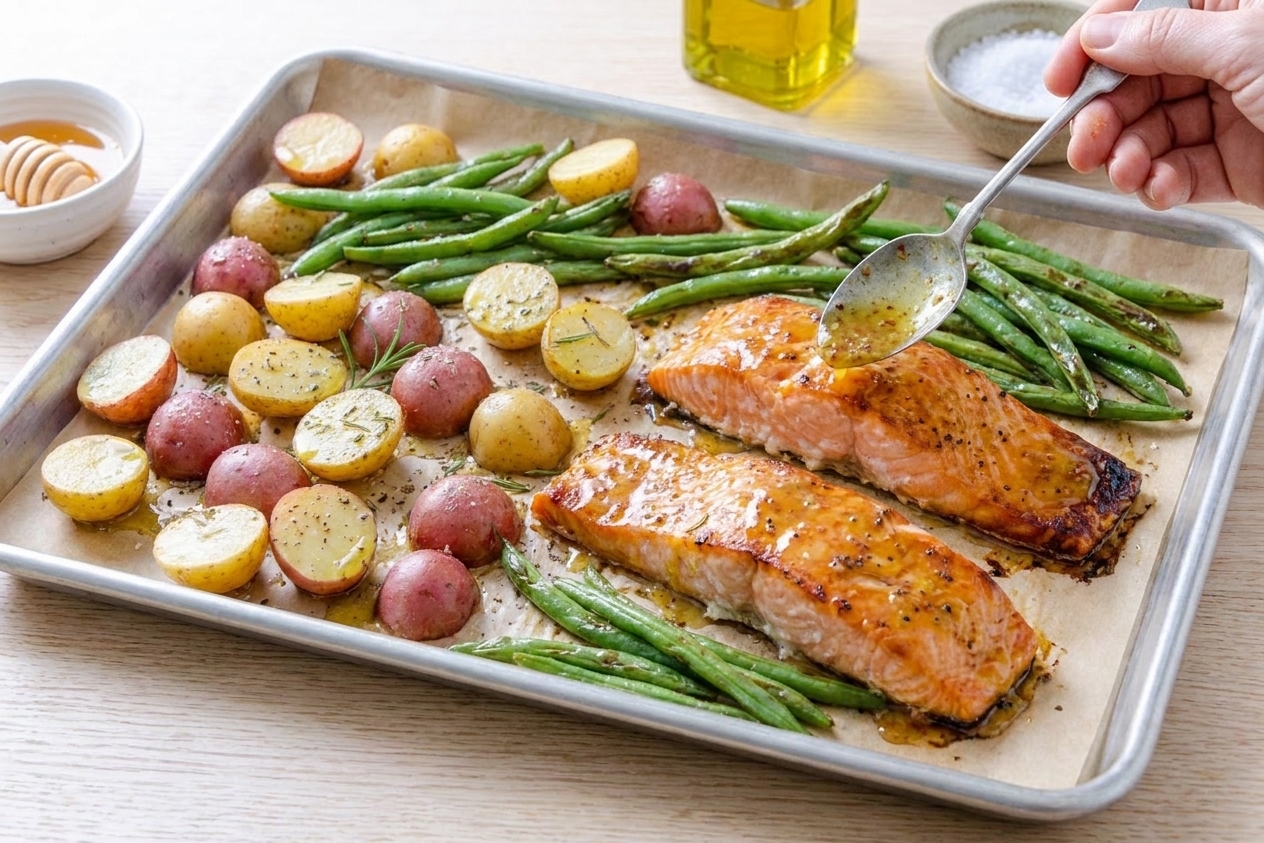
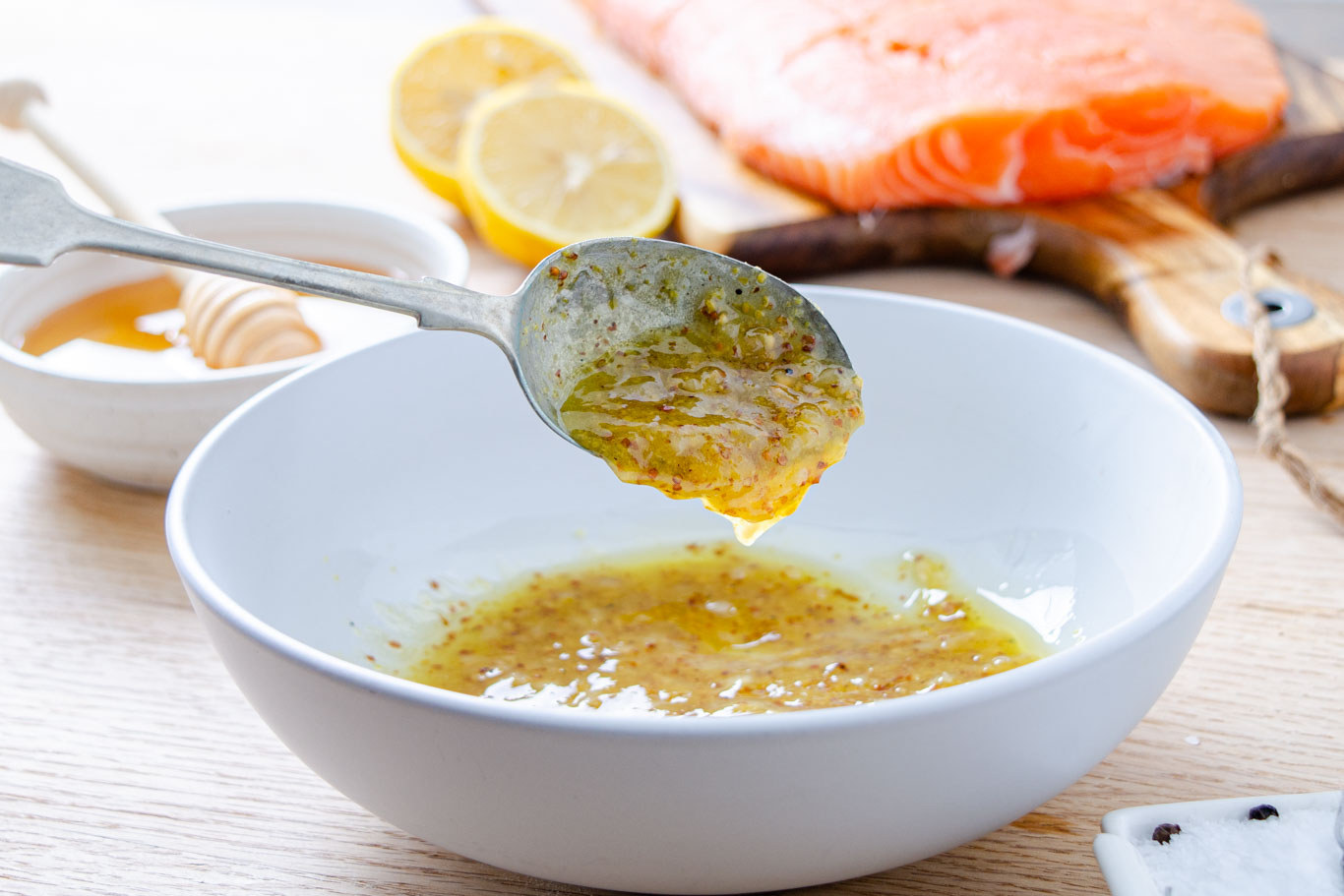
It usually will not at 425°F for the short salmon cook time, especially with the glaze brushed on in two layers. Ovens vary, though, and honey can scorch fast under the broiler. If you broil, do it for 1 minute at a time and watch closely.
What can I use instead of Dijon?
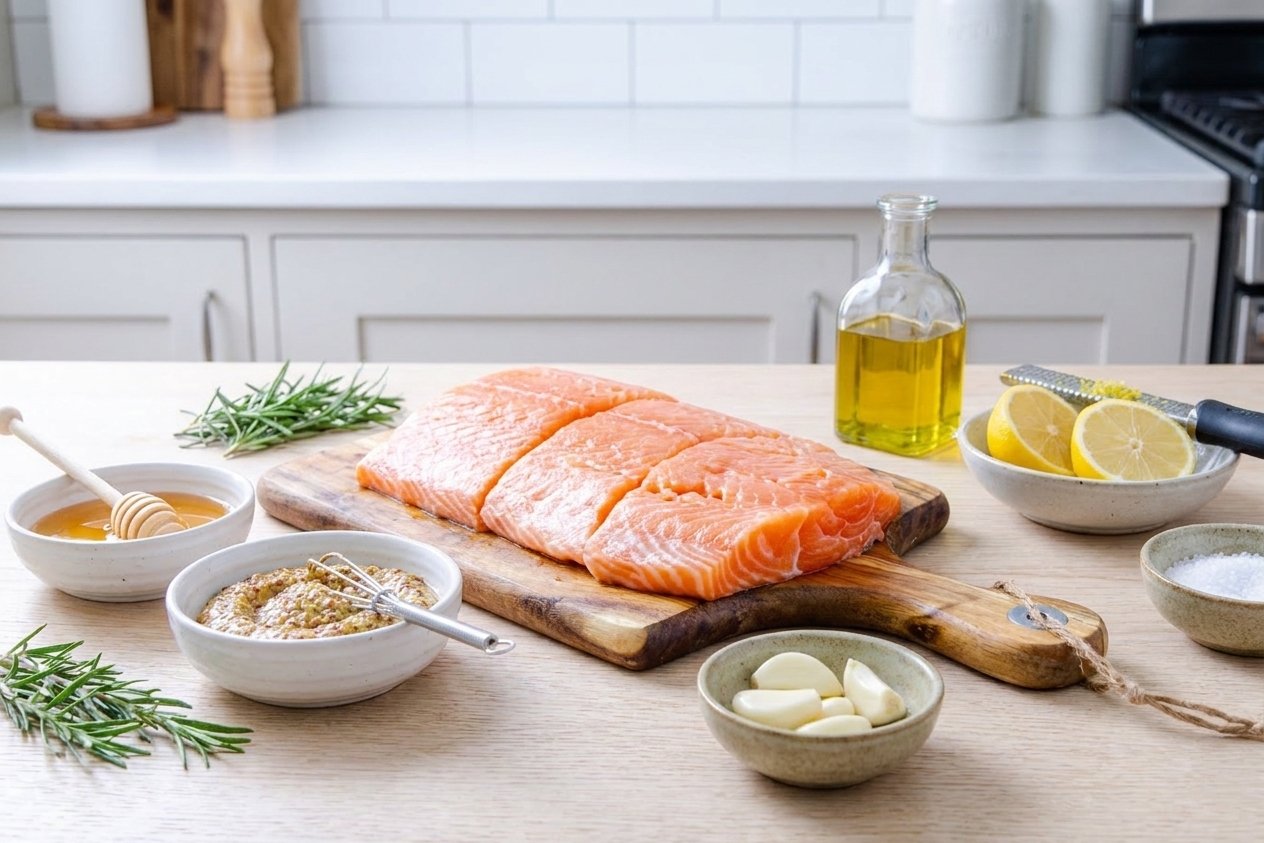
Spicy brown mustard works great. Yellow mustard will taste sharper and less creamy, so add an extra teaspoon of honey to balance it.
Can I make this without potatoes?
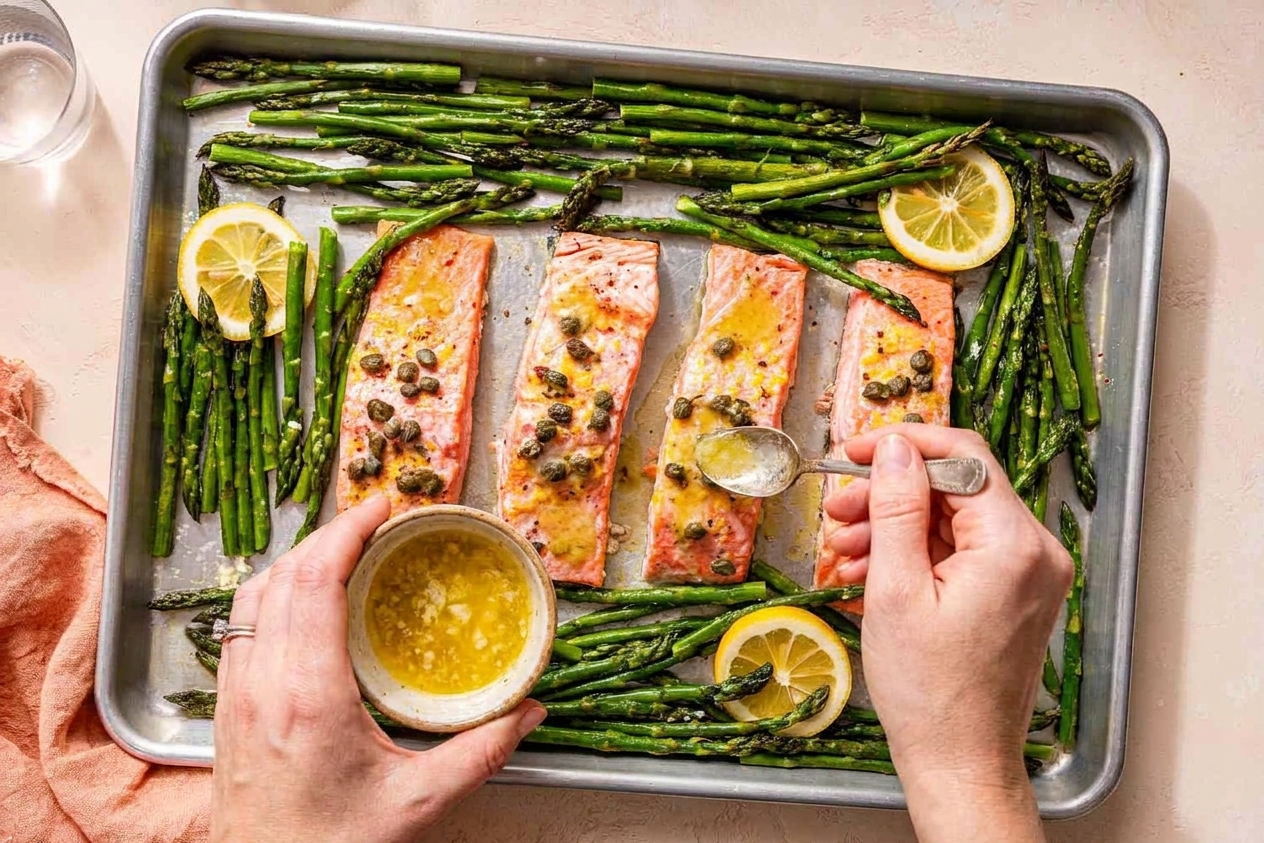
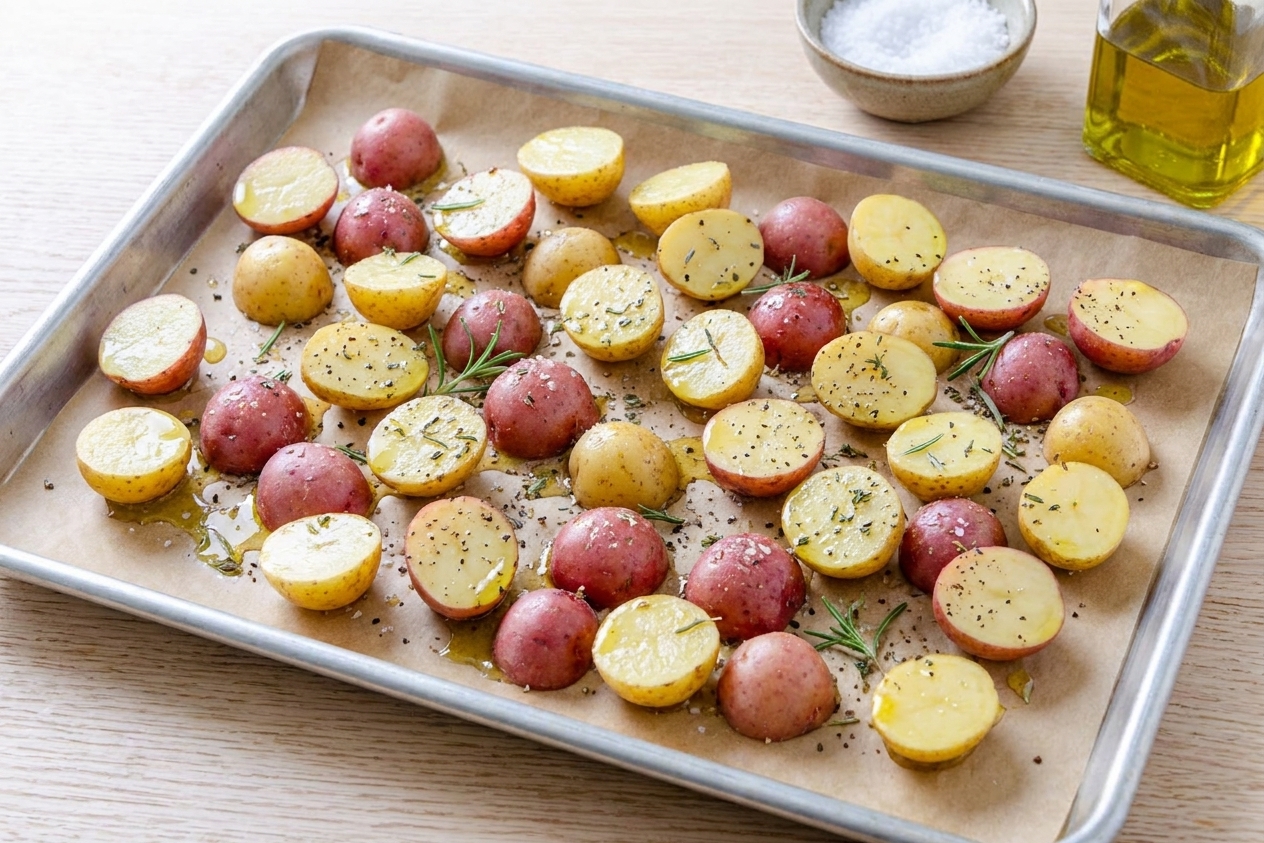
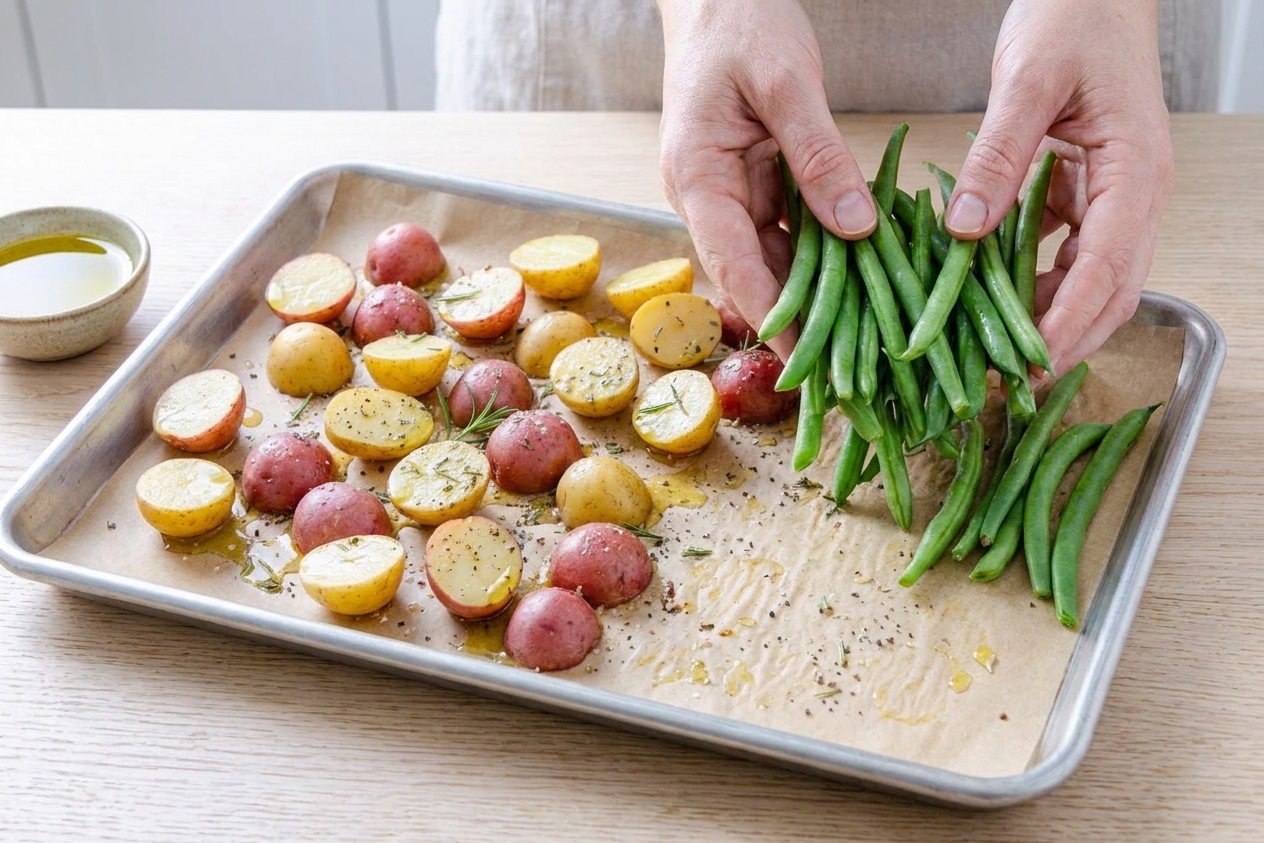
Absolutely. Swap potatoes for quick-cooking veg like broccoli florets or asparagus and start everything at the same time. The total cook time drops to about 12 to 15 minutes.